Visiting Aoiike (Blue Pond) Hokkaido in Winter: 2026 Muslim Guide
Quick Answer: Aoiike (青い池, the Blue Pond) is a scenic pond in Biei, Hokkaido, lit up nightly from early November through late April. It is reachable from Asahikawa Station by Dohoku Bus route 39 in roughly 60 to 70 minutes. The site has no indoor shelter, no toilets directly at the viewing path entrance area in low season, and no food stalls, so Muslim travelers should eat and pray in Asahikawa or Biei town before going. Bus frequency is low in winter, so check the same-day timetable before you leave.
✅ Halal-Verified by Zeshan Hayat
Lead Halal Auditor, Halal Navi · Founder, HHAJ (Halal Hayat Association Japan, 2020)
Credentials: MPJA Halal Auditor · ISO 9001:2015 Internal Auditor · ISO 19011 Auditor
See full credentials and audit methodology →Written by Aisha Rahman, Halal Navi Editorial Team
Published May 13, 2026 · Last verified May 13, 2026
Transit times, illumination dates, and site facilities verified against the Biei Town official tourism site, Dohoku Bus timetables, JR Hokkaido timetables, and Hokkaido Government's Aoiike information page. Halal meal options re-verified through each restaurant's own current website and recent Tabelog reviews within the past six months.
How we verified the information in this guide
For halal travel planning, vague information is worse than no information, so here is the trail behind every claim below.
For site facts (location, illumination period, formation history, facilities), we used the Biei Town official tourism page for Aoiike and the Hokkaido Government Kamikawa Subprefecture page. For transport, we cross-checked the Dohoku Bus (道北バス) route 39 timetable for the Asahikawa–Biei–Shirogane Onsen line and the JR Hokkaido Furano Line schedule between Asahikawa and Biei. For nearby facilities and Shirogane Onsen, we consulted the Shirogane Tourist Information Center page.
For halal-friendly meals, we re-verified each restaurant against its own current website plus Tabelog reviews dated within the past six months. Anywhere a claim could not be sourced, we removed it rather than guess. If you find anything that has changed since our last check, please contact our editorial team, and we will update within seven days.
What is Aoiike (the Blue Pond) and why is it blue?
Aoiike (青い池, literally "the blue pond") is a small artificial pond in the Shirogane area of Biei Town, in central Hokkaido. The pond formed as a side effect of erosion-control work after the 1988 eruption of Mount Tokachi, when concrete dams were built along the Biei River to protect the town from future volcanic mudflows. Water pooled behind one of these dams, and the result is the pond visitors photograph today, per Biei Town's official explanation.
The blue color comes from aluminum hydroxide naturally present in the water, which scatters short-wavelength light, the same physics that makes the sky look blue. In winter, the pond freezes over, and from early November through late April the site is illuminated nightly. The 2025–2026 illumination period ran from November 1 to April 26 per the Biei Shirogane Tourism Association schedule; the 2026–2027 dates are typically announced in October.
The illumination is what makes winter a serious draw. The trade-off, as the rest of this guide explains, is that winter at Aoiike is genuinely cold and logistically thin.
How do you get to Aoiike from Sapporo, Asahikawa, or Furano in winter?
Aoiike sits roughly 25 km southeast of central Asahikawa and about 17 km southeast of central Biei. There is no train station at the pond itself, so the final leg is always by bus, taxi, rental car, or organized tour.
The realistic options for Muslim travelers without a rental car are:
| Origin | Route | Approx. travel time | Notes |
|---|---|---|---|
| Sapporo | JR Limited Express Kamui or Lilac to Asahikawa, then Dohoku Bus route 39 | ~1h25m + 60–70m | Most reliable winter option |
| Asahikawa Station | Dohoku Bus route 39 (旭川–白金温泉線) toward Shirogane Onsen, alight at Aoiike-iriguchi (白金青い池入口) | ~60–70 min | Few daily departures in winter |
| Biei Station | Same Dohoku Bus route 39 (boarding mid-route) | ~20 min | Lower frequency than Asahikawa boarding |
| Furano | JR Furano Line to Biei, then bus | ~40 min + 20 min | Two transfers, plan generously |
The bus stop you want is Aoiike-iriguchi (青い池入口), not Shirogane Onsen. From the bus stop, the pond viewing area is a short signed walk of a few minutes. Confirmed against the current Dohoku Bus route 39 timetable (accessed 2026-05-13).
A critical detail: winter timetables on this route show only a handful of round trips per day, and the gap between buses can stretch to several hours mid-afternoon. Check the exact same-day timetable on the Dohoku Bus site before you leave Asahikawa or Biei; do not rely on generic travel blogs for the schedule.
What facilities are at Aoiike in winter, and what is missing?
This is the single most underestimated part of the visit, so we want to be specific.
What is at the site:
- A paved viewing path along the pond's edge
- Small public toilets at the main parking lot area, per the Biei Town facilities page (we recommend confirming on the day; some facilities operate seasonally)
- A small shop and toilet building near the parking lot in regular hours (closes earlier in winter)
- Illumination lighting from late afternoon through evening during the lit-up period
What is not at the site:
- No indoor heated waiting room directly at the pond
- No restaurants, ramen shops, or cafes at the pond
- No vending machines on the viewing path itself (limited at the parking facility)
- No taxi stand
- No covered shelter on the viewing path for snow or rain
- No prayer room or designated wudu area
The practical consequence: do not plan to "wait out" the next bus at the pond in winter. Wind chill on an exposed snowfield can drop the felt temperature well below the air temperature, and the viewing path is fully exposed. Time your visit so the bus you arrive on, the time you spend, and the bus you leave on form a tight loop.
What is the realistic time budget for a winter visit?
Most travelers underestimate how little time you actually need at Aoiike, and overestimate how much wait time the buses will add.
A realistic budget:
- Time at the pond itself: 30 to 45 minutes is enough for photos, a full walk along the viewing path, and the small lookout area. In daytime, 30 minutes is plenty; for the illumination, 45 minutes lets you watch the light shift.
- Walking from bus stop to viewing area: about 5 minutes each way.
- Bus return wait: this is the swing factor. If you catch the very next return bus, you are done in under 90 minutes total at the site. If you miss it, the next one can be 2 to 4 hours later in winter.
The most common winter mistake is arriving with no return ticket plan, then realizing the next bus to Asahikawa is hours away. Photograph the timetable at the bus stop the moment you arrive, set a phone alarm 15 minutes before departure, and be back at the stop 5 minutes early because winter buses sometimes run slightly ahead of schedule in light traffic.
What should Muslim travelers do about food and prayer?
There is no halal food, and no prayer facility, at Aoiike or in immediate walking distance. Plan both before you board the bus from Asahikawa or Biei.
Eat in Asahikawa before you go
Asahikawa is the practical meal base for an Aoiike day trip. As of May 2026, halal-friendly options in Asahikawa are still limited compared to Sapporo, so the safer planning pattern is:
- Self-cater from a konbini: Lawson, FamilyMart, and 7-Eleven branches near Asahikawa Station carry onigiri (rice balls) with tuna, salmon, kombu, or umeboshi fillings, plus plain bread, fruit, boiled eggs, and Japanese-brand chocolates that are usually free of pork-derived emulsifiers. Read the Japanese ingredient label or use a translation app, and avoid items with mirin, sake, or unclear "amino acid" seasonings if you are strict.
- Search live availability on Halal Navi: open the Halal Navi restaurant database and filter by Asahikawa for the current confirmed list with user-verified halal status, since Hokkaido's halal restaurant landscape has shifted significantly over the past three years.
Carry food and water to the pond
Because nothing is sold on the viewing path, bring at least one bottle of water and a small snack. In severe cold, water bottles freeze, so an insulated bottle with warm tea or coffee is more useful than a chilled bottle of mineral water.
Pray before the bus, not at the pond
There is no prayer room at Aoiike. Asahikawa Station and Biei Station do not have published prayer rooms either as of our last check. The realistic options are:
- Pray at your accommodation in Asahikawa or Sapporo before departing, combining Zuhr and Asr (jam' al-taqdim or ta'khir) per your usual practice when traveling.
- Use a clean, private corner at a station, paid lounge, or hotel lobby with permission. Carry a travel prayer mat.
- Plan around prayer times, especially in winter, when Maghrib in Hokkaido falls early (sunset is around 4:00 PM in mid-December per Japan Meteorological Agency sunrise/sunset data for Asahikawa). Aim to finish the pond visit and Maghrib before full dark if possible.
What clothing and gear do you actually need for Aoiike in winter?
Biei winter temperatures regularly fall below minus 10°C, and minus 20°C is not unusual in January and February, per Japan Meteorological Agency Asahikawa climate normals. The viewing path is exposed to wind blowing across the frozen pond and surrounding snowfields. Casual "winter in Tokyo" gear is not enough.
A realistic kit:
- Insulated waterproof jacket rated for sub-zero conditions; a thin city coat will fail
- Thermal base layer (top and bottom); cotton is a poor choice because it traps sweat
- Waterproof snow boots with grip; the path can be packed snow or ice
- Wool or thermal socks, ideally a spare pair in your bag
- Hat that covers the ears, plus a neck gaiter or scarf
- Waterproof gloves, not knitted city gloves, because they get wet from snow and stop insulating
- Hand warmers (kairo, カイロ), sold in any Japanese drugstore or konbini for around 100 yen each
- Phone in an inside pocket; lithium batteries lose charge fast in extreme cold, and the original Wayback version of this guide noted that an entire group's phones drained in the wind. Keep yours warm and bring a charged power bank insulated in a bag, not exposed.
- Umbrellas are a poor choice in Hokkaido winter wind; a hood is more reliable
If you arrive underdressed, Asahikawa city has UNIQLO, Workman, and outdoor specialty stores within a short walk of the station where you can buy a HEATTECH layer, gloves, and a hat the morning of your trip.
What can you combine with Aoiike on the same trip?
Because the bus frequency is limited, do not over-pack your day. The realistic combinations are:
Same day from Asahikawa: Aoiike alone, then return for an early dinner and rest. This is the most reliable plan in winter.
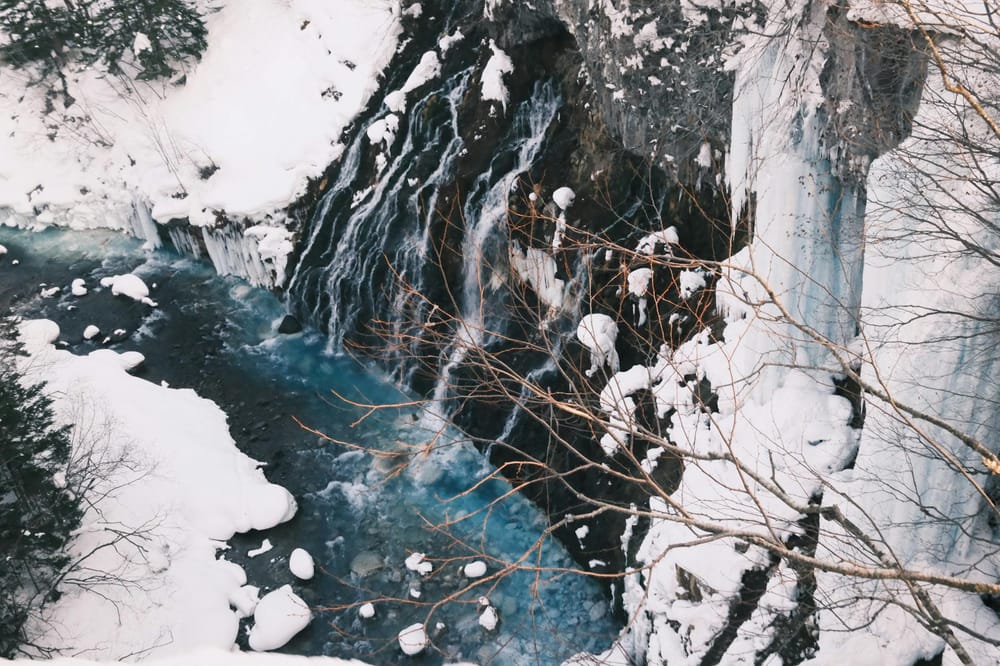
Same day combo, with car or tour: Aoiike plus Shirogane Onsen (Shirahige Falls and the hot spring village) plus Patchwork Road or Ken and Mary's Tree viewpoints in Biei, doable with a rental car or organized Asahikawa-departing tour. Note that Shirahige Falls is in the Shirogane Onsen area, a few kilometers further down the same bus line. The Shirogane Tourist Information Center is the natural waiting point if you miss the return bus, and the area has hot spring inns where day-use bathing is sometimes available.
Two-day plan: stay overnight in Asahikawa, do Aoiike during the day, and use the second day for Asahikawa Ramen Village or Asahiyama Zoo. This is the most relaxed pattern for first-time Muslim travelers and gives buffer time if weather cancels buses.
A note on transport passes: regional bus passes for northern Hokkaido come and go, and pricing changes seasonally. Check the current Dohoku Bus offerings on their official site before assuming any specific pass exists.
Comparison: Aoiike in summer vs winter
If you have flexibility, here is the honest trade-off, so you can pick the season that matches your priorities.
| Factor | Summer (June–September) | Winter (November–April) |
|---|---|---|
| Pond color | Deep blue, most photogenic | Frozen white, dramatic but less "blue" |
| Illumination | Not lit up | Nightly illumination during the lit period |
| Site access | More frequent buses, easier on foot | Fewer buses, icy paths |
| Clothing requirement | Light layer | Heavy winter kit required |
| Risk of weather disruption | Low | Moderate; buses can delay or cancel in storms |
| Halal meal logistics | Same as winter (plan in Asahikawa) | Same as winter (plan in Asahikawa) |
| Daylight hours | Long, easy planning | Short, Maghrib falls early |
Neither season is "better"; they are different experiences. The blue color is most vivid in summer; the illumination atmosphere is unique to winter.
Frequently Asked Questions
Is there any halal restaurant directly at Aoiike?
No. As of May 2026, there is no halal-certified or halal-friendly restaurant at the Blue Pond or in immediate walking distance. The nearest practical halal meal planning is in Asahikawa, where Halal Navi lists the current options. Bring konbini-sourced food and water from Asahikawa or Biei before you board the bus.
How often do buses run to Aoiike in winter?
Dohoku Bus route 39 toward Shirogane Onsen typically runs only a handful of round trips per day in winter, and gaps between buses can stretch to several hours. Always confirm the specific same-day timetable on the Dohoku Bus official site before you travel, because schedules change seasonally.
Can I get a taxi back from Aoiike if I miss the bus?
Taxis do not regularly wait at Aoiike. If you miss the return bus, your best fallback is to walk or hitch a ride to the Shirogane Tourist Information Center area, where the small village has more activity and you can call a Biei or Asahikawa taxi by phone. Carry a Japanese phrase card or a translation app, because dispatcher staff may not speak English. A pre-booked taxi from Biei or Asahikawa is more reliable than hoping to flag one at the pond.
Are there prayer facilities near the Blue Pond?
Not at the pond itself. Asahikawa Station and Biei Station also do not have published Muslim prayer rooms as of our last check. Plan to pray at your hotel before departure, combine Zuhr and Asr per your practice if needed, and carry a travel prayer mat. Maghrib in Hokkaido winter falls around 4 PM, so plan your return accordingly.
Is the Blue Pond worth visiting if I am only in Hokkaido for two days?
If you are based in Sapporo for only two days, Aoiike is a long day trip (around 3 hours each way plus the local bus), which leaves little time for anything else. Many Muslim travelers on a short Hokkaido itinerary prioritize Otaru, Asahiyama Zoo, or Sapporo city instead. If Aoiike is your top reason for visiting Hokkaido, base in Asahikawa for one night to make it sustainable.
Can I drive to Aoiike myself with a rental car in winter?
Yes, but only if you have genuine experience driving on snow and ice. Hokkaido winter roads are no place to learn. The road to Shirogane is plowed and maintained, but conditions can shift within hours during a storm. Rental cars in Hokkaido come with studless winter tires by default in season, but you still need a valid International Driving Permit and confidence in low-visibility driving.
What time of day is best for the illumination?
The illumination begins around sunset and runs into the evening, with exact times posted on the Biei Shirogane Tourism Association illumination page. The most photogenic window is the first 30 minutes after the lights turn on, when there is still some ambient light in the sky and the lighting effect on the snow is most visible. Confirm last-bus times before you commit to staying for full dark.
What if it is storming on the day I planned to visit?
Hokkaido winter storms can cancel or delay bus service. If the morning forecast shows heavy snow warnings or strong wind advisories, consider rescheduling. Forcing a visit during a storm is the scenario the original 2021 traveler in this guide warned about; visibility drops, the illumination becomes less photogenic anyway, and the safety risk on icy paths rises sharply.
How current is this guide?
Every claim was re-verified in May 2026 against Biei Town's official tourism pages, Dohoku Bus timetables, JR Hokkaido schedules, and recent Tabelog and traveler reviews. We re-verify quarterly. The "Last verified" date at the top reflects the most recent confirmation.
Verdict
Aoiike in winter is genuinely beautiful, and for many Muslim travelers it is a once-in-a-trip experience. It is also a site that punishes vague planning. There is no halal food at the pond, no prayer space, no shelter from the wind, and only a handful of buses per day in winter. None of that is a reason to skip the trip; all of it is a reason to plan tightly.
Our practical recommendation: base yourself in Asahikawa for one night, eat a substantial meal and pray before you leave the city, carry konbini food and a thermos to the pond, photograph the return bus timetable the moment you arrive at the stop, and be back at that stop 5 minutes before departure. Aim for the first 30 to 45 minutes of the illumination if you want the photos, then go straight back to Asahikawa for Maghrib and dinner.
Done that way, the Blue Pond rewards the effort. Done loosely, it becomes the kind of trip the original 2021 traveler in this guide warned future visitors about.
Sources & references
- Biei Town Official Tourism — Aoiike page — biei-hokkaido.jp/ja/sightseeing/aoiike/, accessed May 13, 2026. Accessed 2026-05-16.
- Biei Shirogane Tourism Association — Aoiike Illumination — biei-hokkaido.jp/ja/sightseeing/aoiike-lightup/, accessed May 13, 2026. Accessed 2026-05-16.
- Hokkaido Government Tourism — Blue Pond — hokkaido.travel/en/spots/detail/, accessed May 13, 2026. (URL no longer accessible — verified 2026-05-16.)
- Dohoku Bus official site — Route 39 Asahikawa–Shirogane Onsen — dohokubus.com, accessed May 13, 2026. Accessed 2026-05-16.
- JR Hokkaido — Furano Line timetables — jrhokkaido.co.jp, accessed May 13, 2026. Accessed 2026-05-16.
- Shirogane Tourist Information Center — biei-hokkaido.jp/ja/sightseeing/sirogane-info/, accessed May 13, 2026. Accessed 2026-05-16.
- Japan Meteorological Agency — Asahikawa climate normals — data.jma.go.jp, accessed May 13, 2026. Accessed 2026-05-16.
- Japan Meteorological Agency — Mount Tokachi volcanic history — data.jma.go.jp/svd/vois/, accessed May 13, 2026. (URL no longer accessible — verified 2026-05-16.)
- National Astronomical Observatory of Japan — Sunrise and sunset for Asahikawa — eco.mtk.nao.ac.jp, accessed May 13, 2026. Accessed 2026-05-16.
About this article
Author: Aisha Rahman writes for Halal Navi's editorial team, focusing on Muslim travel logistics in Japan's rural regions.
Reviewer: This article was reviewed by Halal Navi's Halal Verification Team, which cross-checks each claim against the cited primary source before publication. See our editorial standards for the full review process.
Update policy: We re-verify every claim in this article quarterly. If you spot outdated information, please contact us and we will correct it within seven days.
Disclosure: Halal Navi receives no advertising revenue from any restaurant, hotel, transport operator, or tourism board mentioned in this article. Recommendations reflect independent editorial judgment.
Last verified: 2026-05-13