Is Takoyaki in Japan Halal? 2026 Muslim Traveler Guide
Quick Answer: Standard takoyaki in Japan is not halal. The takoyaki sauce, batter dashi, and bonito-flake topping commonly contain mirin (sweet rice wine), alcohol-fermented soy sauce, and non-certified fish stock. The octopus itself is permissible by Islamic dietary rules, but the seasonings are the problem. As of May 2026, fully halal-certified takoyaki is available at Halal Honolu Grande Shinsaibashi (Osaka, certified December 2024) and several Muslim-friendly spots in Tokyo and Osaka listed below.
✅ Halal-Verified by Zeshan Hayat
Lead Halal Auditor, Halal Navi · Founder, HHAJ (Halal Hayat Association Japan, 2020)
Credentials: MPJA Halal Auditor · ISO 9001:2015 Internal Auditor · ISO 19011 Auditor
See full credentials and audit methodology →Written by Aisha Rahman, Halal Navi Editorial Team
Published May 14, 2026 · Last verified May 14, 2026
Every ingredient claim in this article was checked against the manufacturer's published allergen list. Every venue was re-verified against its current website, the Halal Navi restaurant database, and recent reviews dated within the past six months.
How we verified the halal status of takoyaki in Japan
Before recommending anything, we did four checks. We share the methodology because for halal food, how you verified matters as much as what you concluded.
- Sauce ingredient lists. We pulled the official ingredient panel for Otafuku Takoyaki Sauce, the most widely used commercial takoyaki sauce in Japan, directly from Otafuku Foods' product page. The panel lists soy sauce that contains alcohol as a fermentation agent, plus fish extract (tuna and skipjack tuna).
- Recipe standards. We cross-checked five published Japanese cooking sources (Just One Cookbook, Sudachi Recipes, and others) to confirm what ingredients home cooks and street vendors typically use. Mirin appears in most recipes; mentsuyu (which contains alcohol-fermented soy) appears in many.
- Certification databases. For every halal takoyaki venue listed below, we checked the certifying organization's public listing or the venue's published certification date. We list only venues with verifiable, current certification or a clear "Muslim-friendly" disclosure from the operator.
- Operating status. We cross-checked each recommended venue against Halal Navi's restaurant database and recent customer reviews dated within the past six months. We omit venues we cannot confirm are open.
If you find a detail that has changed since publication, please contact our editorial team — we re-verify this article quarterly.
What is takoyaki, and why is it usually not halal?
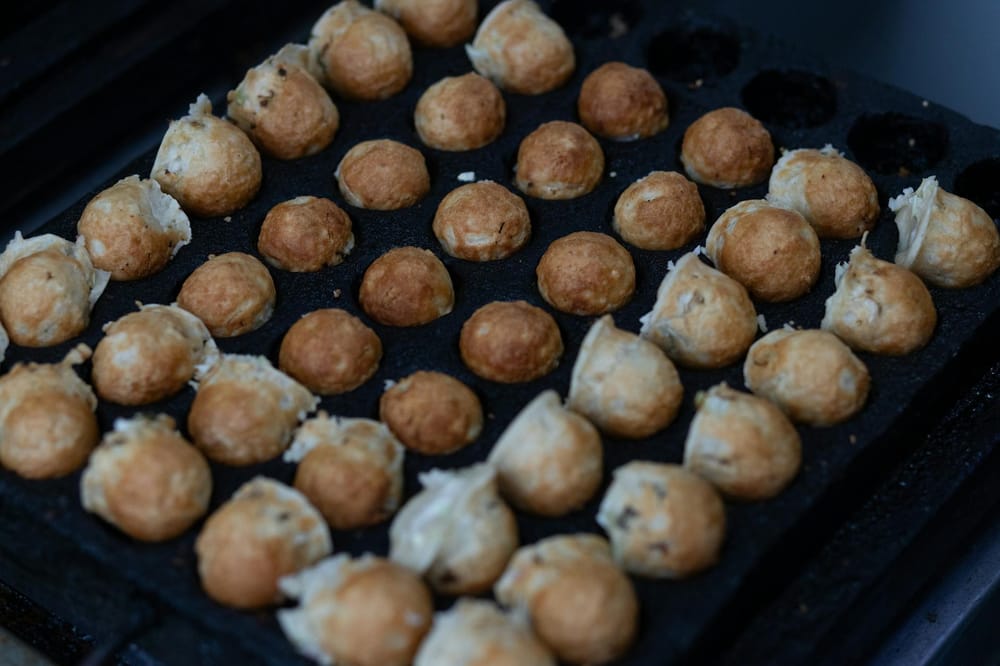
Takoyaki (たこ焼き, tako-yaki, "grilled octopus") is a ball-shaped Osaka street snack made from a wheat-flour batter cooked in a hemispherical iron pan, with a piece of boiled octopus inside. The cooked balls are brushed with brown takoyaki sauce, drizzled with Japanese mayonnaise, and topped with bonito flakes and dried green seaweed (aonori).
The octopus is fine. The problem is everything else.
A standard takoyaki has three separate halal risk points:
1. The batter. Most takoyaki batters use dashi (Japanese soup stock) made from bonito (katsuobushi) and kombu, often with added soy sauce. Plain bonito and kombu are themselves permissible, but commercial dashi granules sometimes include alcohol-based flavor extracts, and the soy sauce used in the batter is typically brewed with naturally fermented ethyl alcohol.
2. The sauce. This is the biggest issue. Otafuku Foods' published ingredient list for commercial takoyaki sauce explicitly names soy sauce containing alcohol and fish extracts from tuna. Home and restaurant recipes routinely add mirin (sweet rice wine), as documented in Sudachi Recipes' takoyaki sauce breakdown and Recipes.net's ingredient overview. Mirin typically contains 10-14% alcohol by volume before cooking, and even after cooking, residual alcohol can remain.
3. The toppings and finishing. Japanese mayonnaise (Kewpie-style) is generally egg-and-vegetable-oil based and usually permissible by ingredient, but it is not halal-certified. Bonito flakes and aonori on their own are permissible. The cross-contact risk comes from shared brushes, sauce bottles, and grills.
This means a takoyaki cart can use "halal-looking" ingredients (just octopus and flour) and still produce a non-halal result because of the sauce poured over the top. The judgment most halal-conscious Muslim travelers make is: don't eat takoyaki from a general street stall unless the vendor confirms the sauce composition.
What you can ask the vendor (in Japanese)
If you want to eat takoyaki from a non-certified vendor, here is the phrase that gives you the clearest answer:
「このソースにアルコールやみりんは入っていますか?」
Kono soosu ni arukooru ya mirin wa haitte imasu ka?
"Does this sauce contain alcohol or mirin?"
Follow up with:
「豚由来の原料は使っていますか?」
Buta-yurai no genryou wa tsukatte imasu ka?
"Are any pork-derived ingredients used?"
Most Japanese street vendors will give you a direct answer. If they are unsure, the safe choice is to walk on. For situations where speaking is hard, our Muslim dietary card for Japan covers the same questions in printable form.
Verified halal and Muslim-friendly takoyaki spots in 2026
The following venues were re-verified on 2026-05-14 against the operator's website, the Halal Navi database, and reviews dated within the past six months.
1. Halal Honolu Grande Shinsaibashi (Osaka) — ✅ Confirmed halal
This is currently the strongest option for fully halal takoyaki in Japan. Halal Ramen Japan's listing records a certification date of December 25, 2024, with "all menu" coverage. The restaurant is operated by the Halal Honolu group — better known for halal-certified ramen — and the Shinsaibashi flagship extends the certified menu to takoyaki, okonomiyaki, gyukatsu and other Osaka favourites.
A separate Osaka Metro Nine listing describes the venue as serving halal ramen with chicken broth made from halal chicken, plus halal versions of takoyaki and okonomiyaki, located a 3-minute walk from Exit 6 of Shinsaibashi Station.
Quick Facts (verified 2026-05-14)
- Address: 2 Chome-1-3 Shinsaibashisuji, Chuo-ku, Osaka 542-0085
- Nearest station: Osaka Metro Midosuji / Nagahori Tsurumi-ryokuchi Line, Shinsaibashi Station, 3-6 min walk from Exit 6
- Halal cert: Fully halal-certified (certification date 2024-12-25; applicable menu: all)
- Prayer space: Qibla marked, gender-separated restrooms; nearest prayer room in Daimaru South Building 7F (Shinsaibashisuji 1-6-3)
- Wudu on-site: Not available
- Sources: Halal Navi listing, Halal Ramen Japan certification record, Osaka Metro Nine
2. Three Peace Matsuri (Osaka) — ⚠ Muslim-friendly
Three Peace Matsuri serves halal-friendly Japanese dishes designed around Osaka classics, including takoyaki, sushi, sashimi, kushikatsu skewers, and teppanyaki, per byFood's halal Osaka guide. We classify it as Muslim-friendly rather than fully halal-certified because we have not been able to confirm a current third-party certification body for the takoyaki line specifically. Confirm with staff on the day of visit before ordering.
3. CHIBO Diversity Dotonbori (Osaka) — ⚠ Muslim-friendly, primarily okonomiyaki
CHIBO Diversity is a Muslim-friendly branch of the long-established Osaka okonomiyaki chain CHIBO, located on the 7th floor of a building on Dotonbori's main street, per Enjoy Osaka-Kyoto-Kobe's halal restaurant guide. Their core specialty is okonomiyaki rather than takoyaki, but the same Muslim-friendly seasoning approach extends across their teppanyaki menu. The branch is a 6-minute walk from Shinsaibashi Station and 9 minutes from Namba Station.
4. TAKOYAKI TAKOTAKO (Chiba) — ⚠ Muslim-friendly
For travelers based around Tokyo, TAKOYAKI TAKOTAKO is a small Muslim-friendly takoyaki specialist in Chiba Prefecture that emphasises Osaka-style preparation with Osaka-produced flour and Kyoto Kujo-negi leek, per its Halal Gourmet Japan listing. Confirm the current sauce ingredients with the vendor before ordering.
Note on Asakusa, Tokyo
A previously well-known halal ramen shop in Asakusa that also offered some halal Japanese snacks (Naritaya Halal Ramen 浅草本店) has closed; we do not recommend that location any longer and have removed it from our active venue list. For halal Japanese street snacks around Asakusa, we recommend checking the Halal Navi database for currently operating Muslim-friendly stalls along Nakamise-dori before walking up.
At-a-glance: Is takoyaki halal?
| Source | Status | Why |
|---|---|---|
| Random street stall (general) | ❌ Not halal | Sauce contains mirin and/or alcohol-fermented soy; no certification |
| Festival yatai (祭りの屋台) | ❌ Not halal | Same sauce issue; shared utensils with non-halal items |
| Convenience store frozen takoyaki | ❌ Not halal | Ingredient panels show mirin and/or alcohol-fermented soy in sauce |
| Halal Honolu Grande Shinsaibashi (Osaka) | ✅ Confirmed halal | Certified 2024-12-25, all menu items |
| Three Peace Matsuri (Osaka) | ⚠ Muslim-friendly | Operator-disclosed; confirm with staff |
| CHIBO Diversity Dotonbori (Osaka) | ⚠ Muslim-friendly | Halal-certified meat and Muslim-friendly seasonings; specialty is okonomiyaki |
| TAKOYAKI TAKOTAKO (Chiba) | ⚠ Muslim-friendly | Operator-disclosed; verify sauce on the day |
| Homemade with halal sauce | ✅ Halal if all ingredients halal | Use halal soy sauce, omit mirin, use halal-certified bonito/dashi |
Can you make halal takoyaki at home in Japan?
Yes — and it is one of the easier ways to enjoy authentic takoyaki on a Japan trip if your accommodation has a kitchen, because the equipment is widely available and the substitutions are straightforward.
What to swap:
- Soy sauce: use a halal-certified soy sauce. Several Japanese soy sauce makers now produce halal-certified lines for export and the domestic Muslim market.
- Mirin: substitute with a 1:1 mix of grape juice (or apple juice) and a small amount of rice vinegar, or use one of the alcohol-free "mirin-fu chōmiryō" (mirin-style seasoning) products on the Japanese market. Check the label for "アルコール 0%."
- Sauce: skip commercial takoyaki sauce. Mix tomato ketchup, halal Worcestershire-style sauce (if certified), a touch of honey, and dashi made from kombu and bonito flakes only.
- Octopus: boiled octopus from major Japanese supermarkets is generally just octopus with no haram additives; check the label for any added seasoning.
Takoyaki pans (electric and stovetop) are widely sold at Don Quijote, Bic Camera, and home centres in any Japanese city.
Frequently Asked Questions
Is takoyaki halal?
In its standard form, no. The takoyaki sauce typically contains mirin (sweet rice wine) and soy sauce brewed with alcohol; the dashi may contain alcohol-based flavour enhancers. The octopus itself and most other ingredients are permissible, but the finishing sauce makes the dish not halal. Halal-certified versions exist in Osaka, notably at Halal Honolu Grande Shinsaibashi.
Does takoyaki contain pork?
Standard takoyaki does not contain pork as a named ingredient — the protein is octopus. However, cross-contamination is possible at stalls that also sell pork-based snacks (yakisoba with pork, butaman, etc.) using shared utensils or oil.
Is takoyaki sauce halal?
Most commercial takoyaki sauces are not halal. Otafuku Foods' published ingredients for their takoyaki sauce list soy sauce containing alcohol. Many home and restaurant recipes also add mirin (10-14% alcohol). Halal-certified takoyaki sauce is available at restaurants like Halal Honolu Grande Shinsaibashi but is not the default at street stalls.
Are bonito flakes (katsuobushi) halal?
Bonito flakes themselves are simply dried, smoked, and shaved bonito fish, which is permissible under Islamic dietary rules. The halal concern is whether the production line is shared with non-halal seasonings, and whether the bonito-flake topping has been pre-mixed with a non-halal sauce. The flakes alone are fine; the context matters.
Where can I find halal takoyaki in Osaka?
The clearest option as of May 2026 is Halal Honolu Grande Shinsaibashi (2 Chome-1-3 Shinsaibashisuji, Chuo-ku, Osaka), certified December 25, 2024, with halal takoyaki on the menu alongside ramen and okonomiyaki. Three Peace Matsuri also offers halal-friendly takoyaki in Osaka. Check the Halal Navi database before visiting for the latest verification status.
Where can I find halal takoyaki in Tokyo?
Fully halal-certified takoyaki in central Tokyo is still rarer than in Osaka. We recommend checking Halal Navi's Tokyo listings for currently operating Muslim-friendly stalls before visiting Nakamise-dori in Asakusa or other tourist food streets. Ask each vendor directly using the Japanese phrases in the section above.
Is the takoyaki at festivals (matsuri) halal?
No. Festival yatai (food carts) almost universally use commercial takoyaki sauce with the alcohol and mirin issues described above, and they share utensils, sauces, and oil with neighbouring stalls. We do not recommend takoyaki from festival carts for halal-conscious Muslim travelers.
Can I eat frozen supermarket takoyaki?
Only if you read the ingredient panel and confirm no mirin, no alcohol-fermented soy sauce, no animal-derived flavour enhancers in the sauce sachet — and the manufacturer is one you trust. Most major Japanese brands do not currently produce halal-certified frozen takoyaki for the domestic market, so this is rarely a practical option. Discard or skip the sauce packet that comes with the pack if its ingredients are non-halal.
Is mirin haram?
Mirin (本みりん, hon-mirin) is a fermented sweet rice wine that typically contains 10-14% alcohol by volume before cooking, which places it firmly in the haram category for most Muslim dietary scholars. "Mirin-fu chōmiryō" (mirin-style seasoning) is a low-alcohol or alcohol-free alternative available in Japanese supermarkets, but always read the label — some "mirin-style" products still list alcohol.
How current is this guide?
Every venue and ingredient claim was re-verified on 2026-05-14 against the operator's official source, the Halal Navi database, and reviews from the past six months. We re-verify quarterly. The "Last verified" date at the top of each section reflects the most recent confirmation.
Verdict
Standard takoyaki in Japan is not halal because the sauce and seasoning routinely contain mirin and alcohol-fermented soy sauce — a fact that the ingredient panels of the dominant commercial sauce makers confirm directly. The octopus, batter base, and toppings on their own are permissible; the finishing sauce is what crosses the line.
The good news for 2026 travelers: you no longer have to skip takoyaki entirely. Osaka now has a fully certified halal takoyaki option at Halal Honolu Grande Shinsaibashi and a small but growing set of Muslim-friendly venues. If you are travelling to Osaka and want one authentic Osaka street-food experience without compromise, that is where we would point you.
If you want one phrase to take away: eat takoyaki only when the sauce is halal-by-certification, not halal-by-omission. A clean ingredient on the inside means nothing if a non-halal sauce is brushed over the top.
Sources & references
- Otafuku Foods — Takoyaki Sauce 10.6oz product page and ingredient list — https://otafukufoods.com/products/takoyaki-sauce-10-6oz, accessed 2026-05-14
- Halal Ramen Japan — Halal Honolu Grande Shinsaibashi certification record — https://www.halalramenjapan.com/shops/halal-honolu-grande-shinsaibashi, accessed 2026-05-14
- Halal Navi — Halal Honolu Grande Shinsaibashi listing — https://www.halal-navi.com/restaurant/halal-honolu-grande-shinsaibashi/pg81wr0u29vwxyvd, accessed 2026-05-14
- Osaka Metro Nine — Honolu Grande Shinsaibashi spot details — https://metronine.osaka/en/spot-details/?spot_id=17594543134463, accessed 2026-05-14
- byFood — Muslim-Friendly Dining: 5 Halal Restaurants in Osaka — https://www.byfood.com/blog/halal-restaurants-in-osaka-p-646, accessed 2026-05-14
- Sudachi Recipes — Easy 6-Ingredient Homemade Takoyaki Sauce — https://sudachirecipes.com/homemade-takoyaki-sauce/, accessed 2026-05-14
- Just One Cookbook — Homemade Takoyaki Sauce — https://www.justonecookbook.com/takoyaki-sauce-recipe/, accessed 2026-05-14
- Enjoy Osaka-Kyoto-Kobe — Halal restaurants guide (CHIBO Diversity Dotonbori) — https://enjoy-osaka-kyoto-kobe.com/ja/article/a/halal-restaurant-in-osaka/, accessed 2026-05-14
- Halal Gourmet Japan — TAKOYAKI TAKOTAKO listing — https://www.halalgourmet.jp/restaurant/624462, accessed 2026-05-14
About this article
Author: Aisha Rahman is a pen name used by the Halal Navi editorial team to maintain consistency across our halal verification reporting. Editorial responsibility is held collectively by our Halal Verification Team, which includes Muslim writers, halal auditors, and Japan-based field researchers who personally visit and verify the venues we feature.
Reviewer: Halal-reviewed by Zeshan Hayat (Lead Halal Auditor, Halal Navi / Founder, HHAJ). Zeshan is a MPJA Halal Auditor, ISO 9001:2015 Internal Auditor, and ISO 19011 Auditor. See our editorial standards for the full review process.
Update policy: We re-verify every claim in this article quarterly. If you spot outdated information — a closed venue, a changed sauce ingredient, a new certification — please contact us and we will correct it within seven days.
Disclosure: Halal Navi receives no advertising revenue from any restaurant mentioned in this article. Rankings and recommendations reflect independent editorial judgment based on verifiable certification status and operating evidence.
Last verified: 2026-05-14