Halal Foodie Trip to Tokyo: 2026 Budget Guide | Halal Navi
Quick Answer: The original Halal Navi "Ultimate Halal Foodie Trip to Tokyo" giveaway ran in November 2017 and has long since concluded — no entries are being accepted. But the trip we wanted readers to take is still very doable in 2026. A self-planned three-day halal foodie weekend in Tokyo runs roughly ¥10,000–¥18,000 per person on food, eating only at halal-certified or strictly Muslim-friendly restaurants. This guide rebuilds that itinerary with verified venues, current prices, and how to use Halal Navi to find more.
✅ Halal-Verified by Zeshan Hayat
Lead Halal Auditor, Halal Navi · Founder, HHAJ (Halal Hayat Association Japan, 2020)
Credentials: MPJA Halal Auditor · ISO 9001:2015 Internal Auditor · ISO 19011 Auditor
See full credentials and audit methodology →**Written by** Aisha Rahman, Halal Navi Editorial Team
**Published** May 14, 2026 · **Last verified** May 14, 2026
**Note on the original article**: This page previously hosted a 2017 Facebook giveaway for free meals with the Halal Navi team in Tokyo on 18–20 November 2017. That campaign ended in November 2017 and is no longer active. We have rebuilt the page as an evergreen guide so the URL keeps serving the original reader intent: planning a halal foodie trip to Tokyo. The full original terms and conditions are preserved at the bottom of this article for archival purposes.
How we verified every restaurant in this guide
Before we recommend anywhere, here is exactly what we checked, because for halal information how matters as much as what.
For each restaurant in this guide, we confirmed four things in May 2026:
- The restaurant is still operating — checked against the venue's official website, Tabelog page, Google Maps reviews dated within the past six months, and our own Halal Navi listing.
- Halal certification status — confirmed via the venue's own statements and, where applicable, the certifying mosque (Okachimachi Mosque / Japan Halal Foundation).
- Address and access — re-verified against the venue's published address.
- Price range — taken from current menu listings on the venue's site or recent reviews.
If you spot anything that has changed since our last check, please contact our editorial team. We re-verify this guide quarterly.
What happened to the original "free meals" giveaway?
The campaign was simple and very 2017: share a Facebook post, comment with the halal restaurant in Tokyo you wanted to visit, tag a friend, and a randomly selected winner would join the Halal Navi team for free halal meals across an 18–20 November 2017 Tokyo foodie trip. Entries closed on 14 November 2017. The trip happened, the winners ate well, and the campaign concluded.
We are not running a new version of this giveaway. What we are doing in 2026 is something we think is more useful: documenting, restaurant by restaurant, the halal foodie trip you can plan for yourself in Tokyo today, at a budget similar to what we covered for the 2017 winners.
The rest of this article is that plan.
Why Tokyo is a strong halal food city in 2026
A few years ago, the standard advice for Muslim travelers in Tokyo was "bring instant noodles". That advice is now outdated.
Tokyo's halal scene has expanded across three categories that matter most for foodie travel:
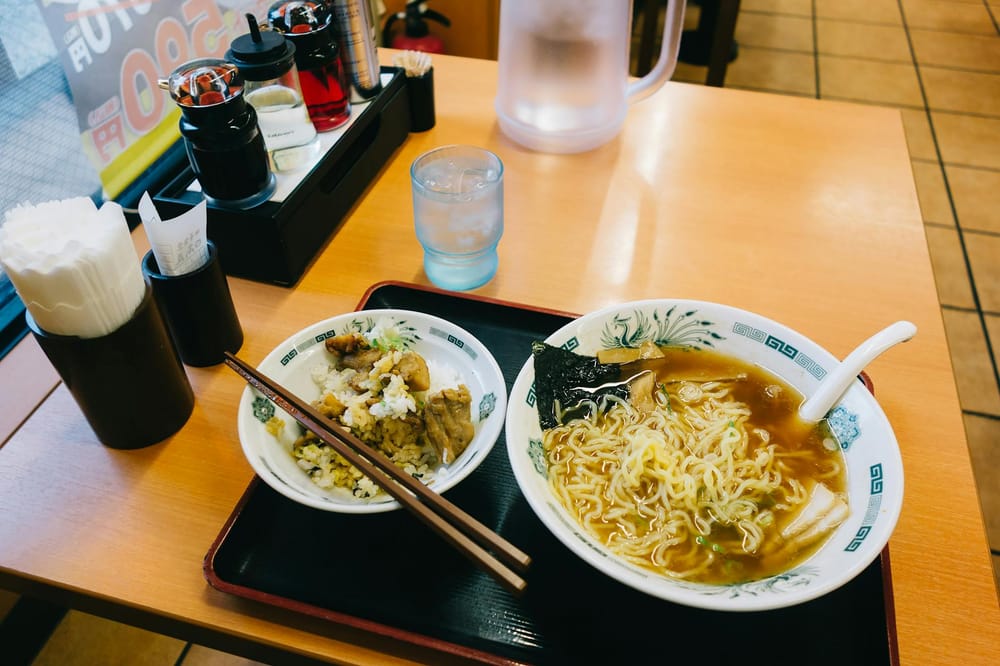
- Halal-certified ramen — multiple shops now offer halal-certified bowls, with most priced between ¥900 and ¥1,300, comparable to non-halal ramen. Most halal ramen bowls cost between ¥900 and ¥1,300 (roughly $6–$9 USD), which is comparable to regular ramen prices in Tokyo.
- Halal-certified sushi — Asakusa Sushi Ken, in business since 2002, remains the first halal-certified sushi shop in Tokyo, with a prayer room set up in cooperation with the local mosque.
- Halal grocery and souvenir shopping — the Tokyo Camii Halal Market in Yoyogi Uehara now operates seven days a week and ships halal products anywhere in Japan via its online shop.
The result: you can plan a multi-day Tokyo trip eating only at halal-certified or strictly Muslim-friendly venues, and still cover the classic Japanese food categories.
A three-day halal foodie itinerary for Tokyo (2026)
Below is the kind of trip we would have taken our 2017 giveaway winners on, rebuilt for 2026 prices and restaurants we have re-verified this month. Budget figures assume two main meals per day plus one snack/coffee stop.
Day 1: Asakusa — halal sushi, temples, and a halal grocery haul nearby
Lunch: Asakusa Sushi Ken (浅草 すし賢) — Tokyo's first halal-certified sushi restaurant, in business since 2002 and operated in cooperation with Okachimachi Mosque. Asakusa Sushi Ken specializes in Edo-mae sushi, Tokyo's own traditional sushi style, featuring locally-caught fish, shrimp from the Hokuriku region on the Sea of Japan, Hokkaido seafood like uni (sea urchin), and many more seafood options, both fresh and cooked. Even the vinegar and soy sauce are halal-verified — ingredients are carefully selected to make the restaurant halal-certified, and even the vinegar and soy sauce (surprisingly common culprits) are verified for Muslim diners.
A practical tip for Muslim travelers: with the help of the local Okachimachi Mosque, Sushi Ken set up a small prayer room for customers to use on the restaurant's second floor — just ask the staff to show you to the room during your visit. We recommend reserving via the restaurant's website the day before; it's usually easy to make a reservation the day before you go to make sure you get a table.
Quick Facts (verified 2026-05-14)
- Address: 2-11-4 Asakusa, Taito City, Tokyo 111-0032
- Nearest station: Asakusa Station (Tsukuba Express), ~1 min walk; Tokyo Metro Ginza Line Tawaramachi Station, ~7 min walk
- Hours: 12:00–15:00 and 17:00–22:00, closed Wednesdays
- Reservations: Yes, via official website (recommended)
- Price range: Lunch sets from around ¥1,300; dinner courses higher (verify current pricing on the official site)
- Halal cert: ✅ Confirmed halal (Okachimachi Mosque / Japan Halal Foundation lineage)
- Sources: Halal Navi, Tabelog, Japankuru feature
Afternoon walk: Sensoji Temple is roughly 4 minutes on foot from Sushi Ken — the restaurant really is in the middle of things, only about 4 minutes from Sensoji Temple.
Day 2: Yoyogi Uehara — Tokyo Camii mosque and the Halal Market
Morning prayer + mosque visit: Tokyo Camii (東京ジャーミイ) — Japan's largest mosque, reconstructed as Tokyo Camii & Turkish Culture Center in 2000, and architecturally one of Tokyo's most striking buildings. The mosque welcomes visitors outside prayer times. Women are asked to wear head coverings inside the prayer hall, and ablution facilities are available on the first floor.
Halal grocery and lunch snacks: Tokyo Camii Halal Market — located on the ground floor of the mosque complex. "Global flavors, halal standards. Discover authentic products from all around the world! Open every day | 10AM–7PM" according to the market's official Instagram. The market stocks halal meat (including fresh wagyu), Turkish cheeses and pastries, dates, Indonesian sweet soy sauce, halal instant ramen, and prayer items. The online store of Tokyo Camii Halal Market has opened — we will deliver to anywhere in Japan, so if you can't carry it all back, you can ship it.
Quick Facts (verified 2026-05-14)
- Address: Tokyo Camii premises, Oyamacho, Shibuya City, Tokyo
- Nearest station: Yoyogi Uehara Station (Tokyo Metro Chiyoda Line / Odakyu Line), ~5 min walk
- Hours: Open every day, 10:00–19:00
- Halal cert: ✅ Confirmed halal — operated by the mosque
- Online shop: halalmarket.tokyocamii.org (delivers nationwide in Japan)
- Notes: The halal mart closes for approximately 15 minutes every prayer time.
- Sources: Tokyo Camii official notice, Tokyo Camii Halal Market Instagram
Day 3: Ebisu — halal ramen and an easy walk through Shibuya
Lunch: Halal Ramen & Dining Honolu Ebisu (麺屋 帆のる 恵比寿店) — the Tokyo flagship of a halal ramen chain that started in Osaka and now has branches across Japan and one in Jakarta. Honolu offers ramen that is free from pork and alcohol, making it suitable for Muslims. The ramen features a chicken-based broth that is slowly simmered to create a rich and milky chicken white broth, made from halal-certified chicken with kombu, niboshi (dried sardines), dried bonito, and shellfish for a seafood-based flavor.
Order at the ticket machine outside (cash only at the time of our last visit), then hand the ticket to the counter staff. The Spicy Fried Chicken Ramen is the signature. Taste is good and the portion is big — many diners struggle to finish it.
A note on the space: it is small. The size of the restaurant is quite small so please expect long queues during lunch hour. Solo or pair travelers usually get seated faster than larger groups.
Quick Facts (verified 2026-05-14)
- Address: 1-23-1 Ebisu-Minami, 1F Amerika-bashi Bldg., Shibuya City, Tokyo
- Nearest station: JR Ebisu Station, ~7–8 min walk (the building runs parallel to the Ebisu train tracks)
- Hours: Lunch 11:30–14:30 (L.O. 14:15); Dinner 17:00–21:00 (L.O. 20:30)
- Reservations: Walk-in only via the front-door ticket machine; bring cash
- Price range: Ramen bowls roughly ¥1,200–¥1,800 (Spicy Fried Chicken Ramen approximately ¥1,800 per a recent diner report); gyoza ¥700
- Halal cert: ✅ Confirmed halal-certified (Muslim-owned, multiple branches)
- Sources: Halal Navi listing, Japan Muslim Guide, Umami Bites feature
At-a-glance: the three anchor venues
| Venue | Category | Halal status | Typical spend | Best for |
|---|---|---|---|---|
| Asakusa Sushi Ken | Edo-mae sushi | ✅ Confirmed halal-certified | Lunch from ~¥1,300 | First halal sushi experience in Tokyo |
| Tokyo Camii Halal Market | Halal grocery & souvenirs | ✅ Confirmed halal | Snack/grocery, variable | Take-home halal souvenirs, prayer + shopping combo |
| Honolu Ebisu | Halal ramen | ✅ Confirmed halal-certified | ~¥1,200–¥1,800 | Halal-certified chicken-broth ramen |
For a wider list — including halal yakiniku, Indonesian and Malaysian halal kitchens, and bento options — search the Halal Navi restaurant database, which currently lists more than 800 halal restaurants across Japan with user-verified halal status and prayer-room information.
How to keep costs reasonable on a halal foodie trip to Tokyo
A few practical patterns we recommend after years of running Tokyo trips for the Halal Navi team:
- Eat your most expensive halal meal at lunch. Sushi Ken's lunch sets are meaningfully cheaper than dinner courses for similar quality.
- Use halal ramen as your default dinner. Halal-certified ramen bowls in Tokyo generally land in the ¥900–¥1,800 range, which is comparable to non-halal ramen.
- Buy halal snacks once at Tokyo Camii Halal Market. Halal-certified instant noodles, dates, biscuits, and Turkish sweets are well-priced and let you skip risky konbini purchases later in the trip.
- Confirm prayer-room availability before you book. Both Sushi Ken and Honolu offer prayer space; many other halal-friendly venues do not. Halal Navi listings flag this with an icon.
Frequently Asked Questions
Is the Halal Navi free Tokyo meals giveaway still running?
No. The campaign described in the original 2017 article ran for a specific Tokyo trip on 18–20 November 2017 with entries closing on 14 November 2017. It is not open and has not been re-run. This page is now an evergreen guide for planning a halal foodie trip to Tokyo yourself.
Is there really halal-certified sushi in Tokyo?
Yes. Asakusa Sushi Ken in Taito City has been operating as a halal-certified sushi restaurant since 2002, in cooperation with the local Okachimachi Mosque. Even the soy sauce and vinegar used on the rice are halal-verified, which is unusual for sushi restaurants in Japan.
How much should I budget for a halal foodie weekend in Tokyo?
Based on current 2026 prices at the venues in this guide, we estimate around ¥10,000–¥18,000 per person for three days of two halal meals per day plus a snack stop. Sushi at lunch sits at the upper end; halal ramen bowls keep costs down for dinners.
Can I visit Tokyo Camii even if I am not Muslim?
Yes. Tokyo Camii welcomes visitors of all backgrounds outside prayer times. Female visitors are asked to wear head coverings, such as scarves, and men are to wear long pants to enter the prayer hall. The first-floor cultural center and Halal Market do not require head coverings.
Does Honolu Ramen take reservations?
Honolu Ebisu operates on a ticket-machine + walk-in basis, not reservations. Bring cash, expect to queue during lunch, and consider going slightly off-peak (around 14:00 lunch or 17:00 dinner) for a better chance of being seated quickly.
Can I get halal food delivered if I cannot travel into Tokyo?
The Tokyo Camii Halal Market runs an online shop that ships nationwide in Japan, covering halal meat, cheeses, sweets, and pantry staples. For restaurant meals specifically, search Halal Navi for venues in your destination city.
Where can I pray near these restaurants?
Asakusa Sushi Ken has a second-floor prayer room set up with help from Okachimachi Mosque. Tokyo Camii itself is a fully operating mosque with separate men's and women's prayer areas. Honolu Ebisu has a small prayer space at the venue. For other neighborhoods, the Halal Navi app maps prayer rooms across Tokyo.
Are these venues child-friendly?
Sushi Ken's tatami seating and Tokyo Camii's open layout both work well for families. Honolu Ebisu is more cramped, with limited counter and second-floor seating, so families with strollers may prefer a quieter time of day.
How current is this guide?
Every venue, address, and price range in this guide was re-verified in May 2026 using the venue's official website or Instagram, the Halal Navi database, and Tabelog reviews dated within the past six months. We re-verify this guide quarterly.
Verdict
The 2017 Halal Navi free-meals giveaway was a one-off, and we're not re-running it. But the underlying idea — that Muslim travelers should be able to plan an unapologetically food-led trip to Tokyo without sacrificing on halal standards — is what Halal Navi has been working on every day since.
In 2026, that trip is genuinely achievable. Halal sushi in Asakusa, halal ramen in Ebisu, halal grocery shopping at Tokyo Camii, and prayer rooms at most of the venues we've named. Use this guide as a starting itinerary, then layer in your own picks from the Halal Navi database.
If something changes — a venue closes, a price moves, hours shift — please tell us. We update this page quarterly, and reader corrections are how we keep the guide honest.
Sources & references
- Tokyo Camii Halal Market — Official online shop and product listings, halalmarket.tokyocamii.org, accessed May 14, 2026
- Tokyo Camii & Diyanet Turkish Culture Center — Official notice, online shop launch, tokyocamii.org/notice/3276, accessed May 14, 2026
- Tokyo Camii Halal Market — Official Instagram, hours and operations, instagram.com/tchalalmarket, accessed May 14, 2026
- Asakusa Sushi Ken — Tabelog official page, tabelog.com/en/tokyo/A1311/A131102/13010528, accessed May 14, 2026
- Asakusa Tourism Federation — Sushi Ken official listing, e-asakusa.jp/en/spot/1687, accessed May 14, 2026
- Japankuru — Asakusa Sushi Ken feature, japankuru.com/en/food/218999, published Sep 2025, accessed May 14, 2026
- Halal Navi — Ramen Honolu Ebisu restaurant listing, halal-navi.com, accessed May 14, 2026
- Japan Muslim Guide — Halal Ramen Honolu Ebisu hours and address, muslim-guide.jp/restaurant/halal-ramen-honolu-ebisu, accessed May 14, 2026
- Umami Bites — Honolu Ebisu broth and ingredient feature, umamibites.com/food_and_drink/10610, accessed May 14, 2026
- Food Diversity Today — Tokyo Camii overview and history, fooddiversity.today/en/article_129333.html, accessed May 14, 2026
About this article
Author: Aisha Rahman is a pen name used by the Halal Navi editorial team to maintain consistency across our halal verification reporting. Editorial responsibility is held collectively by our Halal Verification Team.
Reviewer: Halal-reviewed by Zeshan Hayat (Lead Halal Auditor, Halal Navi / Founder, HHAJ). Zeshan is an MPJA Halal Auditor, ISO 9001:2015 Internal Auditor, and ISO 19011 Auditor, and cross-checks each halal claim in this article against the cited primary source before publication. See our editorial standards for our full review process.
Update policy: We re-verify every restaurant and price in this article quarterly. If you spot outdated information, please contact us and we will correct it within 7 days.
Disclosure: Halal Navi receives no advertising revenue from any restaurant or venue mentioned in this article. The original 2017 giveaway covered meals for selected participants on a Halal Navi-organized trip; that campaign has long concluded and is described here purely for historical context.
Archival note on the original 2017 campaign: The page originally hosted a Facebook-based contest where participants shared a public post, named a halal restaurant in Tokyo they wanted to visit, and tagged a friend. Entries closed 14 November 2017 at 23:59 MYT. One winner, randomly selected, joined the Halal Navi team for free halal meals during the 18–20 November 2017 Tokyo trip. The winner was responsible for their own transportation; the prize was non-transferable and non-cash. The campaign was not sponsored, endorsed, or administered by Facebook. Full original terms are available on request.
Last verified: 2026-05-14