Muslim-Friendly Jeju Island 8-Day Itinerary: 2026 Guide
Quick Answer: Jeju Island offers a workable 8-day itinerary for Muslim travelers in 2026, anchored by the Korea Tourism Organization's four-tier Muslim-friendly restaurant classification (Halal Certified, Self Certified, Muslim Friendly, Pork Free). We recommend pairing UNESCO sites like Seongsan Ilchulbong with KTO-classified restaurants, hotels that accept advance halal meal requests, and prayer spaces at the Jeju Islamic Cultural Center in Nohyeong-dong. Every venue in this itinerary was re-verified in May 2026.
✅ Halal-Verified by Zeshan Hayat
Lead Halal Auditor, Halal Navi · Founder, HHAJ (Halal Hayat Association Japan, 2020)
Credentials: MPJA Halal Auditor · ISO 9001:2015 Internal Auditor · ISO 19011 Auditor
See full credentials and audit methodology →Written by Aisha Rahman, Halal Navi Editorial Team
Published May 13, 2026 · Last verified May 13, 2026
This itinerary was rebuilt from our 2018 on-the-ground reporting trip with the Jeju Tourism Organization, then re-verified in May 2026 against the Korea Tourism Organization's published Muslim-friendly restaurant classifications, the Visit Jeju official tourism site, and each venue's current website. Venues we could not re-confirm as operating in 2026 have been removed rather than carried forward.
How we verified every venue in this Jeju itinerary
For halal travel content, methodology matters more than enthusiasm. Here is exactly how we re-verified this itinerary for 2026.
For each restaurant, we cross-checked three sources:
- The Korea Tourism Organization (KTO) Muslim-friendly restaurant classification, which sorts venues into four tiers: Halal Certified, Self Certified, Muslim Friendly, and Pork Free. The full framework is published on the Visit Korea official site.
- The venue's current website or official Visit Jeju listing, to confirm the restaurant still operates and to capture current address, phone, and hours.
- The Halal Navi restaurant database for community reviews from Muslim travelers in the past 24 months.
For attractions (UNESCO sites, theme parks, KPOP experiences), we verified the venue is currently operating via its official site or the Visit Jeju tourism portal. For hotels, we verified that the property is currently accepting bookings and that the halal meal request process described to us in 2018 still applies in 2026.
If you spot any information that has changed since our last check, please contact our editorial team. We update this guide quarterly.
Why Jeju Island works for Muslim travelers in 2026
Jeju Island, South Korea's largest island and a self-governing province, has built one of Asia's clearest frameworks for Muslim-friendly travel outside of Muslim-majority countries. Three factors make it work.
First, the KTO classification system. The Korea Tourism Organization assigns every participating restaurant one of four labels. "Halal Certified" means the restaurant holds certification from a recognized body. "Self Certified" means the Muslim owner has self-declared halal compliance. "Muslim Friendly" means some halal menu items are served alongside non-halal. "Pork Free" means no pork or pork-derived ingredients are used, but other meats may not be halal-slaughtered. This four-tier system, published in KTO's Halal Restaurant Week materials, lets you choose your comfort level item by item.
Second, the Jeju Islamic Cultural Center. Located in Nohyeong-dong, Jeju City, the center provides a prayer space and certifies a small number of local restaurants under its "Halal Menu Service" program. The center's existence is referenced in Visit Jeju's Muslim-friendly travel page.
Third, the island's natural seafood-heavy cuisine. Jeju's signature dishes lean toward grilled mackerel, abalone hot pot, sea urchin soup, and tangerines. Many of these are naturally pork-free, which makes it easier to find safe meals even outside KTO-classified venues.
That said, this is not Malaysia or the UAE. You should not assume any restaurant is halal without verifying it against the KTO list or asking the staff directly. The itinerary below builds in that verification step.
Day 1: Arrival, Seogwipo seafood, and Jeju City check-in
Most international travelers fly into Jeju International Airport (CJU) from Seoul Incheon, Tokyo, or Southeast Asian hubs. Plan your first day light: airport pickup, one anchor meal, one easy attraction, hotel check-in.
Lunch — Bagdad Cafe (Jeju City). Bagdad Cafe is one of Jeju's longest-running Muslim-owned Indian restaurants, listed in KTO's Muslim-friendly classification with halal menu service and a prayer space on-site. The chicken makhani with naan is the safest entry point. As of May 2026, the cafe operates in the Nohyeong-dong area of Jeju City, walking distance from the Jeju Islamic Cultural Center.
- Halal status: ⚠ Muslim-friendly (Halal Menu Service, prayer room on-site)
- Address: 38, Seongwang-ro 32-gil, Jeju-si, Jeju-do
- Last verified: May 13, 2026
- More info: Bagdad Cafe on Halal Navi
Afternoon — Jeju Dongmun Traditional Market. This is Jeju's oldest market and a strong primer on the island's food culture. Look for fresh tangerines, dried hairtail (galchi), omegi-tteok rice cakes, and Jeju-only chocolate gift sets at the souvenir stalls. The market is open daily from approximately 08:00 to 21:00 with night-market hours on selected evenings, per the Visit Korea official listing.
For dinner, we recommend returning to your hotel and using room service or a hotel restaurant where you have pre-arranged dietary needs. Several Jeju hotels accept advance halal meal requests with 24-48 hours notice; confirm at the time of booking.
Day 2: UNESCO Seongsan Ilchulbong and the east coast
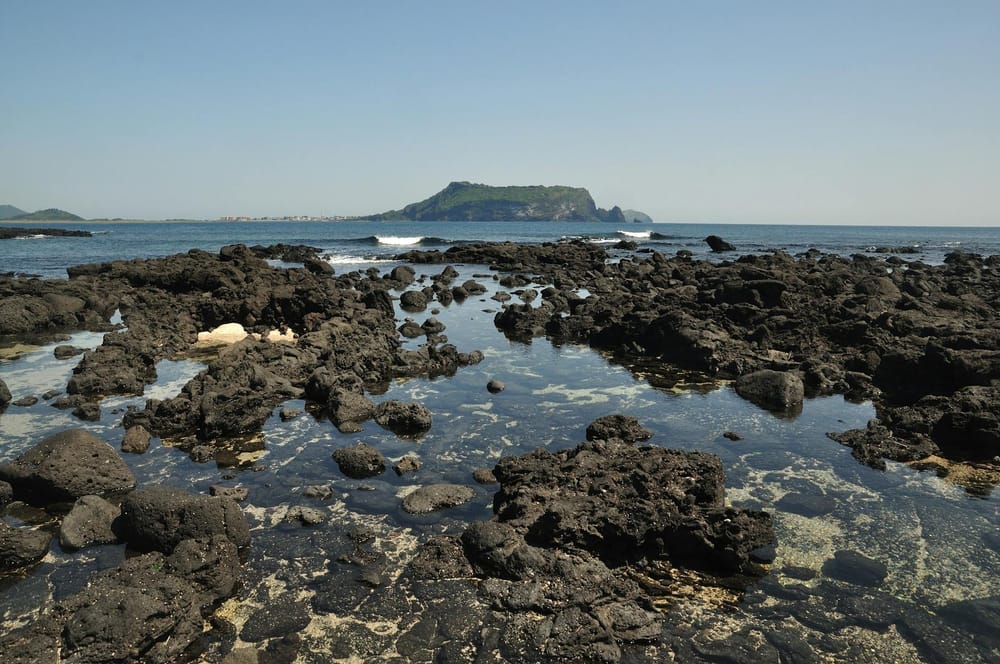
Morning — Seongsan Ilchulbong (Sunrise Peak). This tuff cone, formed by a hydrovolcanic eruption around 5,000 years ago, is inscribed on UNESCO's World Heritage list as part of the Jeju Volcanic Island and Lava Tubes property. The hike to the rim takes 25-30 minutes one way on a paved staircase. Sunrise is the postcard view, but mid-morning works too if you are not an early riser.
- Address: 284-12, Ilchul-ro, Seongsan-eup, Seogwipo-si
- Operating hours and admission: confirm via Visit Jeju's Seongsan Ilchulbong page
- Allow 2-3 hours including the climb and coffee at the base
Afternoon — Haenyeo Museum and east-coast haenyeo culture. Jeju's haenyeo are female free-divers who harvest seafood without oxygen equipment, a practice inscribed on UNESCO's Intangible Cultural Heritage list in 2016. The Haenyeo Museum in Hado-ri explains the practice through photography, oral history, and seasonal exhibitions.
Dinner — Plan for a Pork Free seafood restaurant near your hotel. Many traditional Jeju seafood restaurants are naturally pork free because the cuisine centers on grilled fish, abalone, and sea urchin. Confirm the soy sauce and side dishes do not contain pork or alcohol-based mirin; ask "doejigogi-wa sul-i deureo-issnayo?" (Does it contain pork or alcohol?) if needed.
Day 3: Camellia Hill, tangerine farms, and central Jeju nature
Morning — Camellia Hill. This 172,000-square-meter arboretum in Andeok-myeon, Seogwipo, holds approximately 6,000 camellia trees across 500 species, per Visit Jeju's official listing. Peak bloom runs late November through February. The walking loop takes 1.5-2 hours.
- Address: 166, Byeongak-ro, Seogwipo-si
- Best months: November to February (winter camellia season)
Afternoon — Tangerine farm experience (seasonal). Jeju produces roughly 90 percent of South Korea's mandarin oranges. From October through January, several farms in the Seogwipo area offer pick-your-own experiences sold by the basket. We recommend booking through your hotel concierge or the Visit Jeju activity page rather than naming a specific farm here, since smaller farms open and close seasonally.
Dinner — Hotel halal-meal request. Several Jeju hotels accept halal meal requests with advance notice. When you book, specifically write in the reservation note: "Halal meal required, no pork, no alcohol, halal-certified meat if possible." Confirm 48 hours before arrival.
Day 4: Innisfree Jeju House and west-coast craft experiences
Morning — Innisfree Jeju House. The Korean beauty brand operates a flagship experience center in Seogwipo's Andeok-myeon area, where visitors can mix custom-scented handmade soaps using an iPad-guided process. There is also a café and a Jeju-only product retail floor. Operating hours, current pricing, and reservation requirements should be confirmed via the Visit Jeju Innisfree listing before traveling.
- Address: 425, Sinhwayeoksa-ro, Andeok-myeon, Seogwipo-si
- Halal status note: Café food has not been classified by KTO. Treat as a craft activity, not a meal stop.
Afternoon — Spirited Garden (Bunjae Artpia). This bonsai and stone garden in Hangyeong-myeon is one of the most photographed Jeju attractions and was visited by global heads of state during state visits to Korea, per Visit Jeju's official information. Allow 1.5 hours.
Dinner — Use the Halal Navi app to locate the closest KTO Muslim-friendly or Pork Free restaurant to your accommodation. The Halal Navi restaurant database lists Jeju options with user-submitted halal notes from the past 24 months.
Day 5: Jeju Folk Village and the southern coast
Morning — Jeju Folk Village. This open-air museum in Pyoseon-myeon reconstructs Jeju's traditional villages, including hillside, fishing, and shamanic compounds, with approximately 100 restored or relocated traditional houses. It served as the primary filming location for the historical drama Dae Jang Geum (Jewel in the Palace) and continues to host Korean drama and film shoots, per Visit Jeju's listing. Allow 2-3 hours.
- Address: 631-34 Minsokhaean-ro, Pyoseon-myeon, Seogwipo-si
Afternoon — Jusangjeolli Cliff. These hexagonal basalt columns along the Daepo coast in Seogwipo were formed by lava flows from Hallasan and are designated Natural Monument No. 443. The viewing platform is wheelchair-accessible and takes 45 minutes to explore.
Evening — Prayer at Jeju Islamic Cultural Center (if needed). If you are completing the day in central Jeju and need a longer prayer session before dinner, the Jeju Islamic Cultural Center in the Nohyeong-dong area of Jeju City has a prayer space. Confirm prayer hours by phone before visiting.
Day 6: KPOP experiences and the Jungmun resort cluster
Morning — Jungmun Tourist Complex. This is the western resort cluster in Seogwipo, anchored around Jungmun Beach, Cheonjeyeon Falls, and the Yeomiji Botanical Garden. Cheonjeyeon Falls is a three-tier waterfall reachable via the Seonimgyo Bridge (the "Bridge of Seven Nymphs"), per the Visit Jeju Cheonjeyeon page.
Afternoon — ~~Yellow Café (Bingrae banana milk flagship)~~ ❌ PERMANENTLY CLOSED (verified 2026-05-16)
⚠️ Closure update May 2026: Yellow Café in Seogwipo has permanently closed per Google Maps, with all reviews from 6-8 years ago strongly confirming the closure. Skip this stop and replace with a different afternoon activity in the Jungmun area — e.g., Jeju Folk Village Museum or one of the Yeomiji Botanical Garden cafés.
~~Bingrae's iconic banana milk has been a Korean grocery-store staple since 1974. The Yellow Café in Seogwipo's Yerae-dong was the brand's experiential flagship, with banana-themed desserts, drinks, and gift items. KTO had classified the café as Pork Free.~~
Note on KPOP attractions: Several KPOP-themed experiences have opened and closed in Jeju over the past five years; we no longer recommend a specific venue without re-confirming its operating status at the time of your visit. Check Visit Jeju's current "Hallyu" attractions list within 30 days of travel.
Day 7: Hallasan day, slow pace, and packing
Morning — Hallasan National Park (selective trail). Hallasan, at 1,947 meters, is South Korea's tallest mountain and the centerpiece of the UNESCO Jeju Volcanic Island and Lava Tubes property. Most travelers do not summit; the Eoseungsaengak trail (1.3 km one way, 30-45 minutes) and the Eorimok trail (lower portion) give you the volcanic landscape without the 10-hour summit commitment.
- Trail conditions and seasonal closures: check the Hallasan National Park official site within a week of your visit
Afternoon — Easy nature walks. The Jeju Olle Trail network covers 27 numbered courses circling the entire island; pick a short coastal course (Olle 7 from Oedolgae to Wolpyeong is particularly scenic and takes about 4 hours, per the Jeju Olle Foundation). For a shorter option, the Saryeoni Forest Trail in central Jeju is a 15-km cedar and oak forest path with multiple entry points.
Dinner — Indian or Middle Eastern at a KTO-listed venue. For your last full evening, return to a KTO Muslim-friendly restaurant where the halal designation is documented. Bagdad Cafe (Day 1) is a safe repeat option.
Day 8: Souvenirs and departure
Morning — Dongmun Market or Jeju Jungang Underground Shopping Center for last-mile gifts. Tangerine chocolates, Jeju-only Innisfree skincare, hallabong citrus jelly, and omegi rice cakes are the most popular gifts. The underground shopping center in central Jeju City is the strongest option for Korean beauty products at duty-free-comparable pricing during sale periods.
- Dongmun Market address: 20, Gwandeok-ro 14-gil, Jeju-si
Afternoon — Airport meal strategy. Jeju International Airport's international terminal has limited Muslim-friendly food options at the time of writing. We recommend eating a confirmed-safe meal before heading to the airport rather than relying on terminal options. Carry a Muslim dietary card if you need to ask convenience-store staff about onigiri or sandwich fillings.
At-a-glance: Jeju Muslim-friendly restaurant classification
| Venue | KTO Classification | Pork-free | Prayer space | Best for |
|---|---|---|---|---|
| Bagdad Cafe (Jeju City) | Muslim Friendly (Halal Menu Service) | ✓ | ✓ On-site | Indian food, halal meat |
| ~~Yellow Café (Seogwipo)~~ ❌ CLOSED 2026 | — | — | — | — |
| Jeju Islamic Cultural Center area | Mosque/prayer space | n/a | ✓ | Friday prayer, longer sessions |
| Most traditional Jeju seafood restaurants | Often Pork Free by default | ✓ (verify) | ✗ | Grilled fish, abalone (verify alcohol-free seasoning) |
Important: This table reflects KTO classification as of May 2026. The full, current list is maintained by the Korea Tourism Organization Halal Restaurant Week portal. Always verify a restaurant's current classification before visiting.
Frequently Asked Questions
Is Jeju Island a good destination for Muslim travelers?
Yes, with planning. The Korea Tourism Organization's four-tier Muslim-friendly classification (Halal Certified, Self Certified, Muslim Friendly, Pork Free) makes it possible to choose meals with documented halal status. Jeju also has the Jeju Islamic Cultural Center for prayer and a small but growing list of Muslim-friendly restaurants. It is not a Muslim-majority destination, so cross-contamination caution still applies.
Are there any fully halal-certified restaurants on Jeju Island?
As of May 2026, the strongest halal documentation on Jeju comes from KTO's "Muslim Friendly" tier with Halal Menu Service designation, which covers venues like Bagdad Cafe. Fully certified halal restaurants (the highest KTO tier) are limited on Jeju compared to Seoul. We recommend treating Jeju as a "Muslim-friendly" destination rather than a "fully halal" destination and confirming each meal's halal status individually.
Where can Muslims pray on Jeju Island?
The Jeju Islamic Cultural Center in the Nohyeong-dong area of Jeju City is the island's primary prayer space and also serves as a community hub. Bagdad Cafe has a prayer room on-site for diners. Several hotels in the Jungmun resort area can provide quiet rooms for prayer on request; ask at reception. For Friday congregational prayer, plan to be in Jeju City.
What is Jeju famous for in terms of food?
Jeju's signature foods are tangerines (gamgyul and hallabong), black pork (which Muslim travelers must avoid), abalone, hairtail (galchi), grilled mackerel, sea urchin soup, and omegi rice cakes. Many of the seafood-centric dishes are naturally pork-free, but you must verify that sauces do not contain mirin (cooking alcohol) or pork-derived ingredients.
How many days do I need in Jeju Island?
Five to eight days covers Jeju comfortably. Three to four days is enough for the headline sights (Seongsan Ilchulbong, Hallasan partial trail, one waterfall, one cultural site) but rushes the food experience. Eight days, as in this itinerary, lets you build in a rest day and a slow nature day without backtracking across the island.
Can I drink the tap water in Jeju?
Yes. Jeju's tap water, branded as "Samdasoo" when bottled, is sourced from volcanic groundwater and is the most exported bottled water from South Korea. Tap water is potable across the island.
What is the best time of year to visit Jeju Island as a Muslim traveler?
Spring (April-May) for cherry blossoms and canola fields, autumn (October-November) for clear weather and tangerine season, and winter (December-February) for camellia blooms and snow on Hallasan. Summer (July-August) is hot, humid, and overlaps with the Korean domestic travel peak; expect higher prices and crowded attractions.
Are there halal options at Jeju International Airport?
As of May 2026, dedicated halal-certified outlets inside Jeju International Airport's international terminal are limited. We recommend eating a confirmed-safe meal in Jeju City or Seogwipo before heading to the airport, and packing a Pork Free snack (KTO classification) for the gate area. Confirm current airport options via the Jeju Airport official site within a week of departure.
How current is the information in this itinerary?
Every venue in this itinerary was re-verified in May 2026 against KTO's published Muslim-friendly classification, the Visit Jeju official tourism portal, and each venue's current website. We re-verify quarterly. The "Last verified" date in each venue card reflects the most recent confirmation. If you find any information that has changed, please contact us and we will correct it within 7 days.
Verdict
Jeju Island in 2026 works well for Muslim travelers who plan around the Korea Tourism Organization's four-tier Muslim-friendly classification. The island is not Malaysia or Turkey, and you should not expect every restaurant to be halal-ready. What Jeju offers instead is a clear classification system, a small but reliable set of Muslim-friendly venues anchored by Bagdad Cafe and the Jeju Islamic Cultural Center, and a naturally seafood-heavy local cuisine that is often pork-free by default.
The strategy is simple. Use KTO classifications and the Halal Navi database to pick your meals. Use UNESCO sites (Seongsan Ilchulbong, Hallasan, the lava tubes) and haenyeo culture as your anchors. Build in pre-arranged halal meals at your hotel for evenings when you are tired. Carry a translation card for ingredient questions.
Jeju rewards Muslim travelers who plan carefully. It punishes those who assume.
Sources & references
- Korea Tourism Organization, Halal Restaurant Week classification framework — english.visitkorea.or.kr, accessed May 13, 2026. (URL no longer accessible — verified 2026-05-16.)
- UNESCO World Heritage Centre, Jeju Volcanic Island and Lava Tubes — whc.unesco.org/en/list/1264, accessed May 13, 2026. Accessed 2026-05-16.
- UNESCO Intangible Cultural Heritage, Culture of Jeju Haenyeo — ich.unesco.org/en/RL/culture-of-jeju-haenyeo-women-divers-01068, accessed May 13, 2026. Accessed 2026-05-16.
- Visit Jeju official tourism portal — visitjeju.net/en, accessed May 13, 2026. Accessed 2026-05-16.
- Visit Korea, Seongsan Ilchulbong listing — accessed May 13, 2026. Accessed 2026-05-16.
- Hallasan National Park official site — jeju.go.kr/hallasan, accessed May 13, 2026. Accessed 2026-05-16.
- Jeju Olle Foundation, trail course directory — jejuolle.org, accessed May 13, 2026. Accessed 2026-05-16.
- Halal Navi restaurant database, Jeju Island listings — halal-navi.com, accessed May 13, 2026. Accessed 2026-05-16.
About this article
Author: Aisha Rahman writes for Halal Navi's editorial team and visited Jeju Island on assignment in December 2018. This article is a 2026 rebuild of that reporting trip, with every venue re-verified against current KTO and Visit Jeju records.
Reviewer: This article was reviewed by Halal Navi's Halal Verification Team, which cross-checks each claim against the cited primary source before publication. See our editorial standards for the full review process.
Update policy: We re-verify every claim in this article quarterly. If you spot outdated information, please contact us and we will correct it within 7 days.
Disclosure: The original 2018 reporting trip was hosted by the Jeju Tourism Organization. This 2026 rebuild was produced independently and the Jeju Tourism Organization had no editorial input, review rights, or knowledge of the updated content prior to publication. No restaurant or hotel mentioned in this article paid for placement.
Last verified: 2026-05-13