Halal, Vegetarian & Vegan Dining in Japan: 2026 Guide
Quick Answer: Japanese cuisine is not automatically safe for halal, vegetarian, or vegan diners. Cooking sake and mirin (sweet rice wine) hide in everyday sauces; bonito-based dashi (fish stock) sits at the base of "vegetable" soups; gelatin and animal fats appear in breads and sweets; and most kitchens share cooking surfaces. The practical playbook: learn a few Japanese ingredient terms, carry a dietary card, prioritise halal-certified or vegan-certified venues, and verify with staff before ordering.
✅ Halal-Verified by Zeshan Hayat
Lead Halal Auditor, Halal Navi · Founder, HHAJ (Halal Hayat Association Japan, 2020)
Credentials: MPJA Halal Auditor · ISO 9001:2015 Internal Auditor · ISO 19011 Auditor
See full credentials and audit methodology →**Written by** Aisha Rahman, Halal Navi Editorial Team
**Published** May 14, 2026 · **Last verified** May 14, 2026
**Sources reviewed**: certifying body databases (Japan Halal Foundation, NPO Japan Halal Association), Tokyo Convention & Visitors Bureau publications, Waseda University demographic research, and the Halal Navi restaurant database.
How we verified the guidance in this article
For halal, vegetarian, and vegan readers, an outdated tip can mean breaking a religious obligation or a long-held ethical commitment. We treat this content with the same standard we apply to our restaurant reviews.
For this 2026 update, we verified four categories of facts:
- Demographic context — checked against the Waseda University study by Professor Emeritus Hirofumi Tanada, accessed via the original IMEMGS PDF and confirmed in the Mainichi/Muslim Network TV summary.
- Certification body identities — confirmed directly from each body's own website (Japan Halal Foundation via As-Salaam Foundation; NPO Japan Halal Association via jhalal.com).
- Government-issued dietary guides — confirmed the current edition number, publisher, and where it is distributed via the Tokyo Convention & Visitors Bureau and VegeProject Japan pages.
- Ingredient and language tips — cross-checked against our existing Halal Navi blog library and the Japan National Tourism Organization's official vegetarian guide.
Where a claim from the original 2024 article could not be re-verified in 2026 (for example, specific third-party apps and influencer follower counts), we either omitted it or replaced it with a verifiable equivalent. If you spot anything that needs correcting, please contact our editorial team.
Why Japanese cuisine is harder than it looks for halal, vegetarian and vegan diners
Japan's reputation for rice, seafood, and tofu can mislead first-time visitors into thinking the cuisine is naturally compatible with restricted diets. In practice, three structural issues complicate this:
Issue 1: Alcohol hides in almost every sauce. Cooking sake (料理酒, ryōri-shu) and mirin (味醂), a sweet rice wine, are everyday seasonings in teriyaki, simmered dishes, sushi rice, and even some miso soups. Mirin is also used to enhance the flavour of Japanese dishes, especially teriyaki, which is why many sushi rices and "vegetarian-looking" plates are not actually alcohol-free.
Issue 2: Dashi is everywhere. Bonito (katsuo) and other fish-based dashi form the savoury foundation of countless "plant-based" looking dishes — clear soups, simmered vegetables, tamagoyaki egg, even some rice seasonings. Japan's official tourism site explicitly warns that natto's accompanying sauce, for example, is often dashi-based, and that travellers must check dashi and base ingredients before eating.
Issue 3: Shared kitchens and cross-contamination. Even when a dish contains no haram or non-vegan ingredients, most Japanese restaurants prepare it on grills, fryers, and cutting boards used for pork, chicken, fish, and beef. Unless a venue is fully halal-certified or fully vegan, cross-contamination remains a live risk.
Who this guide is for: a quick demographic reality check
If you are a Muslim traveller, you are increasingly not alone in Japan. According to research led by Waseda University Professor Emeritus Hirofumi Tanada, Japan's Muslim population reached approximately 420,000 by the end of 2024 — around 0.3 percent of the total population, and a 3.8-fold increase compared to roughly twenty years earlier. Indonesians form the largest single group at around 200,000, followed by communities from Bangladesh, Pakistan, Malaysia, and Türkiye. The number of mosques nationwide had reached about 160 as of July 2025.
This growth is the reason you will now find dedicated halal menus in airports, halal-certified ramen in Ebisu, and a slowly expanding ecosystem of Muslim-aware restaurants — but it is also why the gaps remain pronounced. Demand has outpaced supply, and most everyday eateries have not yet adapted.
The ingredient red flags every restricted-diet diner should learn
Below are the hidden ingredients we see catch travellers off guard most often. Read these before you read any menu.
Alcohol-derived seasonings
- Mirin (味醂) — sweet rice wine. Lower alcohol than sake but still fermented; widely used in sushi rice, teriyaki sauce, simmered vegetables, and snacks.
- Cooking sake / Ryōri-shu (料理酒) — distinct from drinking sake but the same fermented base. Routine in marinades and broths.
- Arukōru (アルコール) — the katakana for "alcohol." Often appears on packaged-food labels and can show up in tomato sauce, vinegar, chocolate, and even fresh-cut fruit packs as a preservative spray.
- Sake kasu (酒粕) — the lees left from sake production; still contains alcohol and turns up in gyoza wrappers, pickles, nabe hot pots, and baked goods.
- Whisky and liquor (リキュール) — used in Japan in tarts, cakes, jellies, puddings, and chocolates.
For Muslim readers: in Islamic dietary law, alcohol is generally prohibited (haram), though rulings on trace cooking alcohol vary slightly between schools of thought (madhhab). For practical decision-making in Japan, we recommend halal-certified or explicitly alcohol-free alternatives.
Animal-derived ingredients in "plant-looking" foods
- Dashi (出汁) — most commonly bonito (katsuo) or sardine (niboshi) stock; the savoury base of miso soup, simmered greens, ramen broths, and many sauces. Kombu (kelp)-only dashi exists but is the exception.
- Gelatin (ゼラチン) — frequent in cream-filled donuts, jellies, marshmallows, and some yoghurts. In Japan, source is rarely specified on packaging.
- Animal fats and emulsifiers — butter and lard appear in breads, pastries, and curry roux blocks. Emulsifiers (乳化剤) on packaged foods may be plant- or animal-derived; if it isn't specified, assume animal.
- Pork powder and animal-based stock — sometimes used as seasoning even on street-food items that look meat-free.
Soy sauce, miso and the "mu-tenka" cue
Soy sauce can contain alcohol; alcohol-free versions exist but are not the default. Miso paste is similarly variable — most commercial miso pastes contain alcohol unless explicitly labelled otherwise, and a useful Japanese cue is "mu-ten-ka" (無添加), meaning "additive-free." It is not a halal certification, but it signals a cleaner ingredient list worth checking further.
The Japanese phrases that earn their place in your phone
You do not need fluent Japanese. You need four high-leverage questions, screen-ready, that get a yes/no answer fast. Japanese restaurant staff are generally helpful and will reach for their own translation app if they are unsure — DeepL and Google Translate are widely used by staff themselves.
| Purpose | Japanese | Romaji | English |
|---|---|---|---|
| Does this contain meat or alcohol? | この料理はお肉かお酒などが入っていませんか? | Kono ryōri wa o-niku ka o-sake nado haitte imasen ka? | Does this dish contain any meat or alcohol? |
| Is there pork in this? | これは豚肉で作られていますか? | Kore wa butaniku de tsukurarete imasu ka? | Is this made with pork? |
| Does the sauce contain alcohol or mirin? | ソースにアルコールかみりんが入っていますか? | Sōsu ni arukōru ka mirin haitte imasu ka? | Does the sauce contain alcohol or mirin? |
| Do you have a dish without meat or gelatin? | 肉やゼラチンを一切使っていない料理はありますか? | Niku ya zerachin o issai tsukatte inai ryōri wa arimasu ka? | Do you have any dish completely without meat or gelatin? |
A single-word version also works in casual settings: pointing at the menu and saying "Butaniku?" with a questioning tone is universally understood as "pork?" — staff will confirm or deny.
For declarative statements, "Sumimasen, butaniku wa dame desu" (すみません、豚肉がだめです) — "Sorry, I cannot eat pork" — is a polite, unambiguous way to set the boundary up front.
Use a printable dietary card
For more complex requirements, a printed or saved dietary card is more reliable than spoken phrases. The Tokyo Convention & Visitors Bureau (TCVB), in cooperation with the Tokyo Metropolitan Government, publishes the TOKYO Vegan & Vegetarian Restaurant Guide annually; the current edition is the 2026–2027 edition, supervised by VegeProject Japan, featuring 123 restaurants split across "all menu items are vegan," "some menu items are vegan," and "some menu items are vegetarian." The back of the guide contains a "point and ask" sheet for indicating ingredients to avoid, which is the same point-and-ask card our 2024 article referenced — it is still in circulation, just in the newer edition.
The English edition is distributed at Tokyo tourist information centres and downloadable as a PDF from the TCVB's brochure portal. For halal-specific guidance, TCVB also publishes the TOKYO MUSLIM Travelers' Guide 2026–2027 through the same brochure portal.
How to read a Japanese halal certification
If you see a halal mark on a menu or product in Japan, the most common issuers are:
- Japan Halal Foundation (JHF) — operated by the As-Salaam Foundation at Masjid Assalam Okachimachi in Ueno, Tokyo. JHF inspects and certifies food according to Islamic law and internationally recognised methods, covering all stages of food processing from receiving and preparing through to labelling and shipping. The mosque is at 4-6-7 Taito, Taito City, Tokyo 110-0016. Closest station: Naka-Okachimachi Station on the Tokyo Metro Hibiya Line; Okachimachi Station on the JR Yamanote Line is also close by.
- NPO Japan Halal Association (JHA) — an Osaka-based certification body recognised by JAKIM (Malaysia), MUIS (Singapore), BPJPH (Indonesia), HAK (Türkiye), GAC (Gulf countries), and MOIAT (UAE). Their office is at 701 Arte Building Honmachi-bashi, 2-24 Honmachibashi, Chuo, Osaka 540-0029.
- Japan Islamic Trust (JIT) — operating Otsuka Masjid, which is also active in halal awareness work in Tokyo and is approximately 5–6 minutes from Otsuka Station on the Yamanote Line.
A halal-certified product will display the body's logo on the packaging or, in restaurants, a framed certificate on the wall. If you cannot see a logo, treat the venue as Muslim-friendly at best — not fully certified.
Practical playbook for restricted-diet diners in Japan
| Step | What to do | Why it matters |
|---|---|---|
| 1. Pre-trip | Search restaurants on the Halal Navi app or website before you fly | Saves you from improvising hungry in a new city |
| 2. Daily | Carry the TCVB dietary card on your phone | Bridges the language gap fast |
| 3. At the venue | Ask the four questions above before ordering, not after | Avoids irreversible mistakes |
| 4. Konbini stops | Read the back-of-pack ingredients; watch for arukōru, mirin, gelatin, and emulsifiers | Many "safe-looking" sandwiches and onigiri fail on hidden ingredients |
| 5. When unsure | Default to simpler preparations (plain rice, plain udon with verified broth, fresh fruit, eggs) | Reduces hidden-ingredient surface area |
| 6. After meals | Share your verified finds on the Halal Navi community | Helps the next traveller |
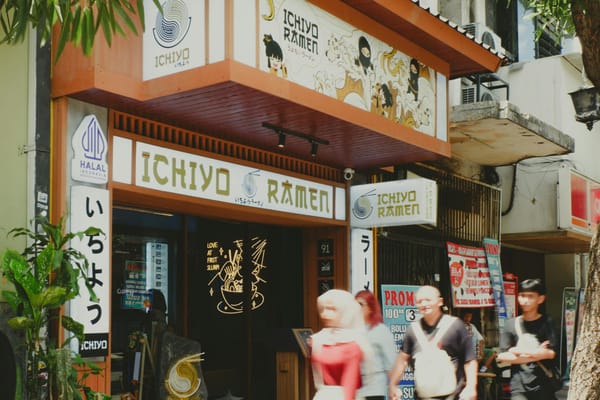
For ramen specifically: traditional Japanese ramen broth is built on soy sauce, miso, and animal-based broth simmered from pork or chicken bone, with chashu (roast pork), menma, and soft-simmered egg as common toppings — so default ramen is not halal or vegetarian. Use Halal Navi to find halal-certified ramen shops.
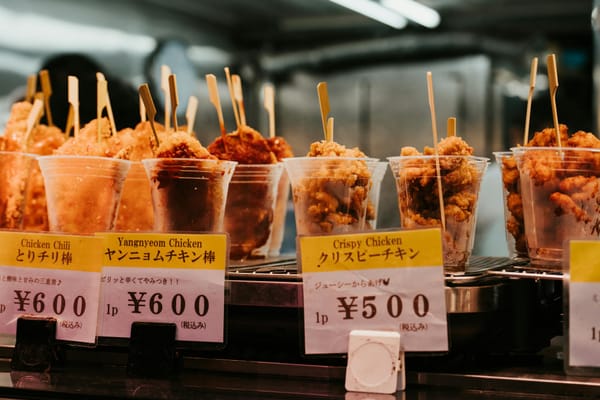
For street-food festivals: takoyaki is generally Muslim-friendly when ordered without sauce — the batter is flour, vegetables, and tako (octopus), but the standard takoyaki sauce often contains animal-derived ingredients or alcohol; you can ask the stall to skip the sauce. Yakisoba at festivals, by contrast, is typically not halal even when labelled "seafood" — meat or alcohol-containing yakisoba sauce is the norm.
Tools and apps we actually recommend
- Halal Navi (our own app and website) — searchable database of halal restaurants, prayer rooms, and user reviews across Tokyo, Kyoto, Osaka, and beyond.
- HappyCow — strong for fully vegan or vegetarian venues; less useful for omnivore restaurants that happen to offer plant-based items.
- Google Maps with reviews — searching "halal" or "vegan" within Maps surfaces tagged venues; reading recent reviews often reveals whether staff are accommodating in practice.
- DeepL and Google Translate — useful both ways. Japanese staff routinely use them too, so a typed exchange is rarely a barrier.
- Government PDFs — the TCVB Vegan & Vegetarian Guide and Muslim Travelers' Guide are free, current, and curated by Tokyo's tourism authority.
We have intentionally not named specific influencer accounts in this 2026 update. Social-media follower counts and account activity change rapidly; an influencer recommendation that was current in 2024 may no longer be accurate. We recommend searching current hashtags such as #halaljapan and #muslimtravelerjapan and judging accounts on their most recent activity.
Frequently Asked Questions
Is Japanese soy sauce halal?
Not by default. Most commercial Japanese soy sauce contains a small amount of naturally occurring alcohol from fermentation, and some brands add alcohol as a preservative. Alcohol-free and halal-certified soy sauces exist and are increasingly available; for everyday halal cooking we recommend looking for a halal-certified brand rather than assuming any soy sauce is acceptable.
Is dashi vegetarian?
Usually no. The most common dashi in Japanese cooking is made from katsuo (bonito) flakes, often blended with other fish such as ago (dried flying fish). Pure kombu (kelp) dashi is the vegetarian/vegan exception and is typically labelled as such. If a soup or sauce doesn't specify, assume the dashi is fish-based.
What does "mu-tenka" (無添加) mean on a Japanese label?
It means "additive-free." It is not a halal or vegan certification, but it usually indicates a shorter, simpler ingredient list — useful as a starting filter for items like miso, soy sauce, and snacks. You still need to read the ingredient list to confirm no alcohol, gelatin, or animal-derived emulsifiers are present.
Are convenience-store onigiri halal-friendly?
Some, but not all. Many onigiri use mirin in the rice seasoning, alcohol spray in the finishing process, or animal-derived emulsifiers. Plain seafood-filled onigiri (tuna, salmon, kombu, umeboshi) are generally the lowest-risk option, but always read the label for arukōru, mirin, and 乳化剤 (emulsifiers).
Can I just ask for "halal food" in Japanese?
Not reliably. Islam remains a minority faith in Japan, and many restaurant staff outside major Muslim-tourism areas may not know the term "halal" or "haram." Frame the question around concrete ingredients instead: pork (butaniku), alcohol (osake / arukōru), and meat in general (oniku). This converts a religious question into a labelling question that staff can answer.
Which halal certifications should I trust on a Japanese product?
The two most widely encountered in Japan are Japan Halal Foundation (JHF), operated from Okachimachi Mosque in Tokyo, and NPO Japan Halal Association (JHA), based in Osaka and recognised by JAKIM, MUIS, BPJPH, HAK, GAC, and MOIAT. If a product carries either logo, it has been audited by a recognised third party. Other smaller bodies exist; when in doubt, check the body's website.
Are there vegan Japanese restaurants outside Tokyo?
Yes, but density is much lower. Kyoto's Buddhist shōjin ryōri tradition produces fully vegetarian temple cuisine, and major cities such as Osaka, Fukuoka, and Sapporo have growing vegan scenes. Outside cities, ryokan (traditional inns) will often prepare vegetarian feasts if you contact them ahead of time with details of your dietary needs, according to the Japan National Tourism Organization. Pre-booking is essential.
What if a server says a dish is vegetarian but it isn't?
This happens. The Japan National Tourism Organization explicitly advises travellers to double-check dashi and base ingredients, because dishes labelled as "vegetarian" may still be cooked with fish stock. Be very clear — and repeat your restriction if needed — when you order, and confirm specifically that the broth, sauce, and seasoning are also free of your restricted ingredients.
How current is this guide?
Every claim was re-verified in May 2026 using primary sources: the certifying bodies' own websites, the Tokyo Convention & Visitors Bureau, Waseda University's IMEMGS publication, the Japan National Tourism Organization, and our internal Halal Navi database. We re-verify quarterly.
Verdict
Japan rewards travellers who arrive prepared. The cuisine is rich, the staff are generally helpful, and the certified ecosystem is growing — but the responsibility for catching hidden mirin, dashi, gelatin, and shared-grill contamination sits with the diner. Memorise the four phrases above, save the TCVB dietary card to your phone, install Halal Navi before you board your flight, and default to certified venues for your big meals. With that small amount of preparation, halal, vegetarian, and vegan travellers can eat exceptionally well in Japan.
Itadakimasu.
Sources & references
- Tanada, H. (2025). Estimate of Muslim Population in Japan, 2024/2025. Institute of Multi-ethnic and Multi-generational Societies, Waseda University. https://www.imemgs.com/wp-content/uploads/2025/09/%E6%97%A5%E6%9C%AC%E3%81%AE%E3%83%A0%E3%82%B9%E3%83%AA%E3%83%A0%E4%BA%BA%E5%8F%A3-2025%E5%B9%B4-%E8%8B%B1%E8%AA%9E%E7%89%88.pdf. Accessed 2026-05-14.
- Muslim Network TV, "Experts warn of misunderstandings as Japan's Muslim population rises," reporting on the Tanada/Waseda 2024 estimate. https://www.muslimnetwork.tv/experts-warn-of-misunderstandings-as-japans-muslim-population-rises/. Accessed 2026-05-14.
- As-Salaam Foundation, "About Us" page, describing Japan Halal Foundation (JHF) certification operations. http://assalaamfoundation.jp/about/. Accessed 2026-05-14.
- NPO Japan Halal Association, official site listing recognitions by JAKIM, MUIS, BPJPH, HAK, GAC, and MOIAT. https://jhalal.com/en/. Accessed 2026-05-14.
- Tokyo Convention & Visitors Bureau, "TOKYO Vegan & Vegetarian Restaurant Guide 2026-2027" brochure listing. https://www.gotokyo.org/book/en/list/5175/. Accessed 2026-05-14.
- VegeProject Japan, "Supervised Tokyo Gov's Vegetarian & Vegan Restaurant Guide" (2026–2027 edition with 123 restaurants). https://vegeproject.org/en/en_tokyo_vegan_vegetarian_guide_2026-2027/. Accessed 2026-05-14.
- Japan National Tourism Organization, "A Vegetarian and Vegan Guide to Japan," including guidance on dashi, konbini staples, and halal certification bodies. https://www.japan.travel/en/guide/vegetarian-guide/. Accessed 2026-05-14.
- Halal Media Japan, "Sushi Ken in Asakusa acquired HALAL certificate" — verification that Japan Halal Foundation operates from Okachimachi Mosque. https://www.halalmedia.jp/archives/8219/sushi-ken-asakusa-acquired-halal-certificate/. Accessed 2026-05-14.
- Halal Navi blog, "9 Alcohol Terms You Need To Remember Before Buying Food In Japan." https://blog.halal-navi.com/en/9-alcohol-terms-before-buying-foods-japan/. Accessed 2026-05-14.
- Halal Navi blog, "History of Ramen and is it Halal?" https://blog.halal-navi.com/en/history-of-ramen-and-is-it-halal/. Accessed 2026-05-14.
- Halal Navi blog, "Is Japanese Festival Street Food Halal? Muslim Japan Guide." https://blog.halal-navi.com/en/japan-street-food-festival-halal/. Accessed 2026-05-14.
- Halal Food in Japan, Masjid Assalam Okachimachi listing with address and access details. https://www.halalfoodinjapan.com/en/mosque/Tokyo/AREAL2198/AREAM2948/M10012/. Accessed 2026-05-14.
About this article
Author: Aisha Rahman is a pen name used by the Halal Navi editorial team to maintain consistency across our halal verification reporting. Editorial responsibility is held collectively by our Halal Verification Team. Read more about our editorial standards.
Reviewer: Halal-reviewed by Zeshan Hayat (Lead Halal Auditor, Halal Navi / Founder, HHAJ). Zeshan holds MPJA Halal Auditor credentials and is an ISO 9001:2015 Internal Auditor and ISO 19011 Auditor.
Update policy: We re-verify the claims in this article quarterly. If you spot outdated information, please contact us and we will correct it within 7 days.
Disclosure: Halal Navi receives no advertising revenue from any restaurant, certification body, app, or government entity mentioned in this article. Recommendations reflect independent editorial judgement.
Last verified: 2026-05-14