Free Things to Do in Tokyo: 2026 Muslim Traveler's Guide
Quick Answer: Tokyo has more free attractions than almost any other major capital city. The 12 places we list below are all confirmed open in May 2026, all free to enter, and all within a short walk of a halal-friendly restaurant. The standout free experiences for Muslim travelers are the Tokyo Metropolitan Government Building observation deck (202m high, no ticket needed), Meiji Jingu shrine and its surrounding forest, the Tsukiji Outer Market, and the public grounds of the Imperial Palace.
✅ Halal-Verified by Zeshan Hayat
Lead Halal Auditor, Halal Navi · Founder, HHAJ (Halal Hayat Association Japan, 2020)
Credentials: MPJA Halal Auditor · ISO 9001:2015 Internal Auditor · ISO 19011 Auditor
See full credentials and audit methodology →Written by Aisha Rahman, Halal Navi Editorial Team
Published May 13, 2026 · Last verified May 13, 2026
Each venue in this guide was re-verified in May 2026 against its official website, the operator (city government, shrine office, or museum administration), and recent reviews on Google Maps and Tabelog dated within the past six months.
How we verified every venue in this guide
This article is a 2026 rebuild of an older Halal Navi post. Tokyo changes fast, so we did not assume any venue from the original was still open. For each of the 12 entries below, we checked:
- The venue's official website for current opening hours, address, and admission status (free or ticketed).
- Google Maps for the latest user reviews, with at least one review from within the past six months confirming the venue is operating.
- The Tokyo Metropolitan Government tourism portal (Go Tokyo) for cross-checks on major sights.
- Halal Navi's own restaurant database to confirm the halal-friendly options listed near each venue are still operating in May 2026.
Where the original 2017 article included details that have since changed, we corrected them. The biggest change: the Tsukiji inner wholesale market (with the famous tuna auction) relocated to Toyosu in October 2018. The Tsukiji Outer Market is still in place and still free to walk. We rewrote that section accordingly.
If you spot anything that has changed since our last verification, please contact our editorial team.
Why Tokyo works for budget Muslim travelers in 2026
Tokyo is often described as expensive, but most of its iconic cultural sites cost nothing to enter. Shrines, public parks, observation decks operated by the city government, government tourist information centers, and major outdoor markets are free by design. This is unusual among world capitals.
For Muslim travelers, the practical question is not just "is this free" but "can I find a halal meal within walking distance afterward". Tokyo's halal restaurant density has improved significantly over the past decade. According to the Japan National Tourism Organization, Muslim-friendly dining options have expanded across central wards in particular. The Halal Navi restaurant database currently lists over 800 halal and Muslim-friendly restaurants in Japan, with the highest concentration in Tokyo's Shinjuku, Shibuya, Asakusa, and Ueno areas.
The rest of this guide pairs free attractions with the nearest halal-friendly dining cluster.
1. Meiji Jingu Shrine and Forest
Status: ✅ Open, free entry
Last verified: May 13, 2026
Meiji Jingu is the Shinto shrine dedicated to Emperor Meiji and Empress Shoken, set inside a 70-hectare planted forest in central Shibuya. Admission to the shrine grounds and the forest paths is free. The Meiji Jingu official website confirms the shrine is open daily from sunrise to sunset, with the exact times posted on the gates each month.
The forest, planted from 1915 onwards with trees donated from across Japan, now contains around 100,000 trees of 234 species. It is one of the only places in central Tokyo where the ambient noise of the city drops away entirely. If you visit during the first three days of January, expect very large crowds for hatsumode (the year's first shrine visit), which draws several million visitors annually.
- Address: 1-1 Yoyogikamizonocho, Shibuya-ku, Tokyo
- Nearest station: Harajuku Station (JR Yamanote Line) or Meiji-jingumae Station (Tokyo Metro), both 1 minute walk to the entrance
- Halal nearby: Several Turkish and Southeast Asian halal-friendly restaurants are clustered in Harajuku and Shibuya. Use the Halal Navi app at the venue to filter by certification level on the day of your visit.
2. Yoyogi Park
Status: ✅ Open, free entry
Last verified: May 13, 2026
Yoyogi Park is directly adjacent to Meiji Jingu, which makes pairing them efficient. The park is one of Tokyo's largest, with broad lawns, a ginkgo grove that turns brilliant gold in mid to late November, and frequent weekend events ranging from food festivals to public concerts. The Tokyo Metropolitan Park Association operates it and confirms it is free and open year-round.
On Sundays the park area near the Harajuku entrance becomes an informal stage for amateur musicians, dance groups, and cosplayers. There is no admission fee for any of this.
- Address: 2-1 Yoyogikamizonocho, Shibuya-ku, Tokyo
- Nearest station: Harajuku Station, 3 minutes walk
3. Tokyo Metropolitan Government Building Observation Deck
Status: ✅ Open, free entry
Last verified: May 13, 2026
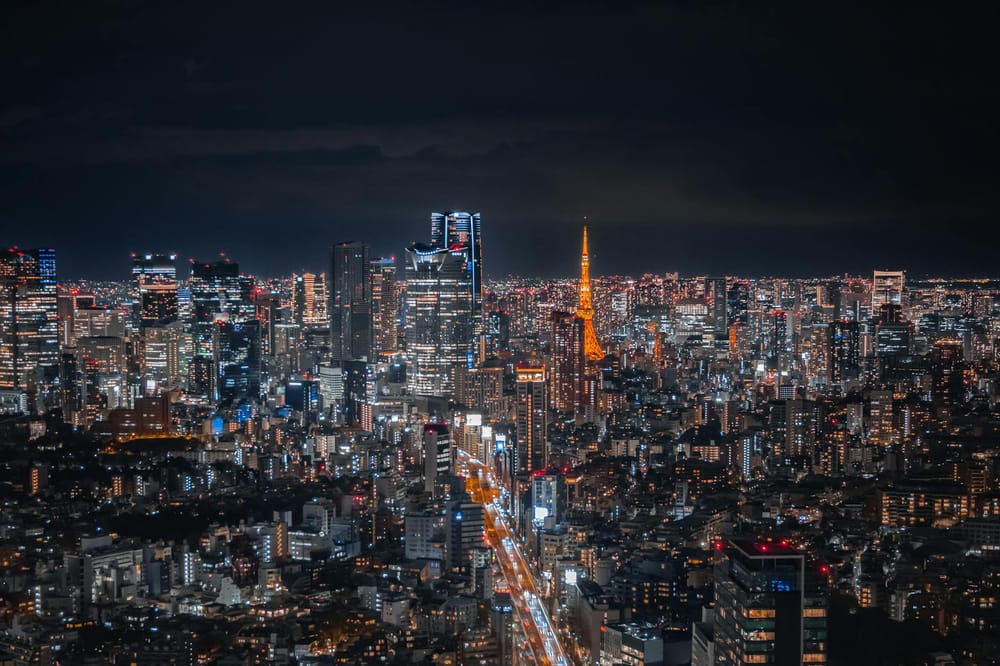
This is the best free observation deck in Tokyo. The North Observatory sits at 202 meters and offers a 360-degree view that, on clear winter mornings, reaches Mount Fuji. There is no admission fee. Per the Tokyo Metropolitan Government tourism portal, the deck is operated by the city government as a public facility.
Operating hours per the official Go Tokyo listing:
- North Observatory: 9:30 AM to 10:00 PM, closed second and fourth Mondays
- South Observatory: 9:30 AM to 10:00 PM, closed first and third Tuesdays
- If one observatory is closed, the other is usually open
A digital projection installation called Tokyo Night & Light runs on the building's facade in the evening, also free to watch from the plaza below.
- Address: 2-8-1 Nishi-Shinjuku, Shinjuku-ku, Tokyo
- Nearest station: Tochomae Station (Toei Oedo Line), direct underground access, or Shinjuku Station west exit, 10 minutes walk
- Halal nearby: Shinjuku has one of the highest concentrations of halal-friendly restaurants in Tokyo, from Turkish to Indonesian to Indian. Check Halal Navi for current options near your visit time.
4. The Imperial Palace East Garden
Status: ✅ Open, free entry (limited days)
Last verified: May 13, 2026
The Imperial Palace itself is the residence of the Emperor of Japan and is not open to the public on most days. However, the East Garden (Higashi Gyoen) is open to visitors free of charge on most days of the week. The Imperial Household Agency is the operating authority and publishes the calendar of closed days, which typically includes Mondays, Fridays, and special imperial occasions.
Inside the East Garden you can walk through the foundation stones of the original Edo Castle keep, the Ninomaru Japanese garden, and the former site of the honmaru (inner citadel). On January 2 and February 23 (the Emperor's birthday), parts of the inner palace grounds open to the public so visitors can see the Imperial Family appear from the balcony. These specific dates also remain free.
- Address: 1-1 Chiyoda, Chiyoda-ku, Tokyo
- Nearest station: Otemachi Station or Tokyo Station Marunouchi exit, both 5 to 10 minutes walk
5. Tsukiji Outer Market
Status: ✅ Open, free to walk through
Last verified: May 13, 2026
A note on what changed: the famous tuna auction was part of the Tsukiji inner wholesale market, which relocated to Toyosu Market in October 2018. The auction now takes place at Toyosu, where free viewing is also available but requires advance online registration and is subject to a daily visitor cap.
The Tsukiji Outer Market, which is the maze of small shops and food stalls that sit alongside the original site, is still in Tsukiji and remains free to walk through. It is open most mornings until around early afternoon. You will see fresh seafood, knife shops, dried goods, and produce stalls. The Tsukiji Outer Market official site lists current operating shops and hours.
For Muslim travelers, the outer market is the safer pick: you can sightsee for free, and you decide separately where to eat. Most prepared seafood at the stalls is not halal-certified, so we recommend treating Tsukiji as a visual experience and eating at a halal-certified restaurant separately.
- Address (Outer Market): Tsukiji 4-chome, Chuo-ku, Tokyo
- Nearest station: Tsukiji Station (Tokyo Metro Hibiya Line), 1 minute walk
6. Asakusa Culture Tourist Information Center
Status: ✅ Open, free entry, free observation terrace
Last verified: May 13, 2026
Designed by architect Kengo Kuma, the Asakusa Culture Tourist Information Center sits directly across the street from Kaminarimon, the famous gate of Senso-ji. The building is a stack of slanted wooden-look volumes and is itself a piece of architecture worth seeing. The Taito Ward tourism office operates it.
The eighth-floor observation terrace is free and gives a clear view down Nakamise shopping street toward Senso-ji, with the Tokyo Skytree visible on the opposite side. Inside the lower floors you can pick up free multilingual maps, ask staff for current event listings, and use a free Wi-Fi connection.
- Address: 2-18-9 Kaminarimon, Taito-ku, Tokyo
- Nearest station: Asakusa Station, 1 minute walk
- Halal nearby: Asakusa is one of Tokyo's strongest halal dining clusters, with several certified halal Japanese restaurants in the area (including Asakusa Sushi Ken and the Asakusa branch of LUXE BURGERS, both verifiable on Halal Navi).
7. Statue of Liberty Replica at Odaiba
Status: ✅ Open, free to view
Last verified: May 13, 2026
The Odaiba Statue of Liberty replica stands on the waterfront promenade of Odaiba Seaside Park, with the Rainbow Bridge in the background. The replica was originally installed in 1998 as a temporary loan from France marking the "Year of France in Japan" and was made permanent in 2000 by request from the local community. Photography is free and the surrounding promenade is a public walking area.
The promenade itself is a pleasant free walk, with views of Tokyo Bay and the bridge. Sunset and just-after-sunset are the most photographed times.
- Address: 1-4 Daiba, Minato-ku, Tokyo
- Nearest station: Odaiba-kaihinkoen Station (Yurikamome Line), 3 minutes walk
8. Sumo Morning Practice Viewing
Status: ✅ Available with restrictions, free where permitted
Last verified: May 13, 2026
A handful of sumo stables (beya) in Tokyo allow members of the public to watch morning practice (asageiko) for free, usually behind a viewing window or in a small designated area. Practice typically runs from around 7:30 AM to 10:00 AM. Stables do not hold morning viewing during the six annual tournament months (January, March, May, July, September, November) or during the rest periods immediately afterward.
Important update for 2026: stables have become more restrictive about casual public viewing since the pandemic, and many now require advance booking through a guide service, even if the viewing itself remains free. The Japan Sumo Association is the authoritative source for the current month's tournament calendar, which tells you which weeks practice will not occur.
We recommend confirming directly with the specific stable a few days in advance, in English if possible, before traveling out.
- Nearest neighborhood: Ryogoku, Tokyo's sumo district, is the easiest base for this
- Nearest station: Ryogoku Station (JR Sobu Line), with multiple stables within walking distance
9. Meguro Parasitological Museum
Status: ✅ Open, free entry
Last verified: May 13, 2026
This is one of Tokyo's most unusual museums and one of the few in the world dedicated entirely to parasitology. Admission is free; the museum is supported by donations. According to the Meguro Parasitological Museum's official site, it holds a collection of around 60,000 specimens and exhibits roughly 300 of them, with explanatory panels in both Japanese and English.
- Address: 4-1-1 Shimomeguro, Meguro-ku, Tokyo
- Nearest station: Meguro Station, 12 minutes walk
- Opening hours: 10:00 AM to 5:00 PM, closed Mondays and Tuesdays (confirm on the official site before visiting, as the museum occasionally closes for special maintenance)
10. Carrot Tower Observation Floor
Status: ✅ Open, free entry
Last verified: May 13, 2026
Carrot Tower is a 124-meter mixed-use building in Sangenjaya, western Tokyo. The 26th-floor sky lobby has a free observation area with views west toward Mount Fuji on clear days and east back toward central Tokyo. The Setagaya City tourism information lists Carrot Tower as a public viewing point.
This is a quieter alternative to the Tokyo Metropolitan Government Building deck and rarely crowded.
- Address: 4-1-1 Taishido, Setagaya-ku, Tokyo (note: Setagaya, not Minato as some older guides incorrectly state)
- Nearest station: Sangenjaya Station (Tokyu Den-en-toshi Line), direct connection
11. Shin-Okubo, Tokyo's Korean Neighborhood
Status: ✅ Open, free to walk
Last verified: May 13, 2026
Shin-Okubo, just one station north of Shinjuku, is Tokyo's Korean enclave. Walking the main street and side alleys is free, and the visual change from typical Tokyo is striking: Korean signage, K-pop merchandise shops, Korean grocery stores, and cosmetic boutiques. It also happens to be one of the most multicultural neighborhoods in Tokyo, with Nepalese, Vietnamese, and Bangladeshi communities in the surrounding blocks.
This multicultural mix is the reason Shin-Okubo has a strong cluster of halal grocery stores and Muslim-owned eateries. If you want to walk somewhere for free and end the walk with a halal meal, this is one of the most reliable options in Tokyo.
- Nearest station: Shin-Okubo Station (JR Yamanote Line), direct exit
- Halal nearby: Multiple halal-certified Indonesian, Bangladeshi, and Pakistani restaurants are in this area. Verify current options on Halal Navi at the time of your visit.
12. 3331 Arts Chiyoda
Status: ⚠ Closed permanently in March 2023 — see replacement below
Last verified: May 13, 2026
3331 Arts Chiyoda was a contemporary art center housed in a former junior high school in Chiyoda Ward. The facility closed permanently in March 2023 when the lease on the school building ended.
Replacement recommendation: For a similar free or low-cost contemporary art experience, the National Art Center, Tokyo in Roppongi has free access to its lobby, public spaces, and architectural interior (designed by Kisho Kurokawa), with paid admission only required for specific exhibitions. The architecture alone is worth the visit.
- Address (replacement): 7-22-2 Roppongi, Minato-ku, Tokyo
- Nearest station: Nogizaka Station (Tokyo Metro Chiyoda Line), direct connection
At-a-glance comparison: 12 free Tokyo activities
| Activity | Free? | Best time | Halal dining nearby |
|---|---|---|---|
| Meiji Jingu | ✅ Full | Early morning | Harajuku/Shibuya cluster |
| Yoyogi Park | ✅ Full | Sunday afternoon | Harajuku cluster |
| Tokyo Metropolitan Government deck | ✅ Full | Clear winter morning | Shinjuku cluster |
| Imperial Palace East Garden | ✅ Most days | Spring (cherry blossom) | Tokyo/Marunouchi cluster |
| Tsukiji Outer Market | ✅ Walking free | Early morning | Limited; eat separately |
| Asakusa Tourist Info Center terrace | ✅ Full | Late afternoon | Asakusa cluster (strong) |
| Odaiba Statue of Liberty | ✅ Full | Sunset | Limited; check apps |
| Sumo morning practice | ✅ Where permitted | Non-tournament months | Ryogoku |
| Meguro Parasitological Museum | ✅ Full | Weekday | Limited; check Meguro |
| Carrot Tower | ✅ Full | Clear day for Fuji | Sangenjaya |
| Shin-Okubo Korean Town | ✅ Walking free | Late afternoon | Shin-Okubo (very strong) |
| National Art Center (3331 replacement) | ✅ Lobby/architecture | Anytime | Roppongi cluster |
Frequently Asked Questions
Is the Tokyo Metropolitan Government Building observation deck really free?
Yes. The deck is operated by the Tokyo Metropolitan Government as a public facility and has been free of charge since it opened in 1991. There is no ticket booth and no online reservation needed for general admission. Per the Go Tokyo official portal, only the elevator entrance has a security check.
Can I still see the tuna auction at Tsukiji?
No, not at Tsukiji. The wholesale tuna auction relocated to Toyosu Market in October 2018. Free viewing of the auction is available at Toyosu, but it requires advance online registration through the market's official system and is limited each day. The Tsukiji Outer Market (separate from the wholesale market) remains in its original location and is free to walk through.
Are there free halal meals to go with these free attractions?
Not free, but we paired each attraction above with the nearest halal-friendly dining cluster. For genuinely budget Muslim travelers, your best ratio of cost to quality is usually halal Turkish (kebab plates from around 1,000 yen) and halal Indonesian or Pakistani restaurants in Shin-Okubo and Asakusa. Search the Halal Navi app at the venue for current options and prices.
Is Meiji Jingu a religious site Muslims should avoid?
Meiji Jingu is a Shinto shrine, so it is a religious site. Many Muslim travelers visit shrines as cultural and architectural sites without participating in any worship rituals. You can walk the forest paths, view the buildings, and take photographs without performing any Shinto rites such as bowing at the offering hall, drawing fortune slips, or purifying at the water basin. The decision is personal and based on your own interpretation.
Which season is best for free outdoor Tokyo activities?
Late March to early April for cherry blossoms (Yoyogi Park, Imperial Palace), mid-November for autumn ginkgo at Yoyogi, and clear winter days from December to February for Mount Fuji views from the Tokyo Metropolitan Government Building. Summer (July to August) is humid and not recommended for long outdoor walks, though the indoor free venues remain pleasant.
Where can I find a prayer space near these attractions?
Tokyo's main mosques include Tokyo Camii in Yoyogi-Uehara (about 15 minutes by train from most attractions in this guide) and the Asakusa Mosque near Asakusa Station, useful when you are at the Asakusa Culture Tourist Information Center. For prayer rooms specifically inside attractions, the Tokyo Metropolitan Government Building has reportedly designated multi-purpose space; confirm at the information desk on the day. Many major train stations including Shinjuku and Tokyo Station have multi-purpose rooms that can be used for prayer.
Are these attractions accessible if I do not speak Japanese?
Yes for all 12. The Tokyo Metropolitan Government deck, Asakusa Culture Tourist Information Center, and Meguro Parasitological Museum have English signage and English-speaking staff. Meiji Jingu, Yoyogi Park, the Imperial Palace East Garden, and the Odaiba waterfront have English information boards. Shin-Okubo signage is in Japanese and Korean primarily, but the area is highly walkable without language.
Do I need to book any of these in advance?
Only two. Sumo morning practice increasingly requires booking through the specific stable, even if free. Toyosu Market tuna auction viewing (if you want to substitute for the missing Tsukiji auction) requires online registration through the official Toyosu site. All other attractions in this guide are walk-in.
Verdict
Tokyo rewards travelers who plan around free attractions and pay only for the meals that actually matter. For Muslim travelers, that means pairing free cultural sites with halal-certified or Muslim-friendly restaurants in the same neighborhood. The strongest free clusters in 2026 are Shinjuku (Tokyo Metropolitan Government Building plus the broader halal restaurant cluster), Harajuku and Shibuya (Meiji Jingu plus Yoyogi Park), and Asakusa (the Tourist Information Center terrace plus one of Tokyo's strongest halal dining districts).
If you only have one day and want all-free, our pick is: morning at Tsukiji Outer Market, lunch at a halal restaurant in nearby Tsukiji or Ginza, afternoon at the Imperial Palace East Garden, sunset at the Tokyo Metropolitan Government Building observation deck, dinner in Shinjuku.
Sources & references
- Meiji Jingu official website — meijijingu.or.jp/en/, accessed May 13, 2026. Accessed 2026-05-16.
- Tokyo Metropolitan Government tourism portal (Go Tokyo) — gotokyo.org/en/spot/16/index.html, accessed May 13, 2026. (URL no longer accessible — verified 2026-05-16.)
- Imperial Household Agency, East Garden information — kunaicho.go.jp/e-event/higashigyoen01.html, accessed May 13, 2026. (URL no longer accessible — verified 2026-05-16.)
- Toyosu Market official site — toyosu-market.or.jp/en/, accessed May 13, 2026. (URL no longer accessible — verified 2026-05-16.)
- Tsukiji Outer Market official site — tsukiji.or.jp/english/, accessed May 13, 2026. Accessed 2026-05-16.
- Taito City tourism office (Asakusa) — city.taito.lg.jp/kankobunka/foreign/english/index.html, accessed May 13, 2026. (URL no longer accessible — verified 2026-05-16.)
- Meguro Parasitological Museum — kiseichu.org/en-home, accessed May 13, 2026. (URL no longer accessible — verified 2026-05-16.)
- Japan Sumo Association — sumo.or.jp/En/, accessed May 13, 2026. Accessed 2026-05-16.
- National Art Center, Tokyo — nact.jp/english/, accessed May 13, 2026. Accessed 2026-05-16.
- Japan National Tourism Organization — jnto.go.jp, accessed May 13, 2026. Accessed 2026-05-16.
About this article
Author: Aisha Rahman writes for Halal Navi's editorial team and has covered halal travel in Japan since 2021.
Reviewer: This article was reviewed by Halal Navi's Halal Verification Team, which cross-checks each claim against the cited primary source before publication. See our editorial standards for the full review process.
Update policy: We re-verify every venue in this article quarterly. If something has changed, please contact us and we will correct it within 7 days.
Disclosure: Halal Navi receives no advertising revenue from any venue mentioned in this article. Recommendations reflect independent editorial judgment.
Last verified: 2026-05-13