Is Japanese Festival Street Food Halal? 2026 Matsuri Guide
Quick Answer: Most Japanese festival (matsuri) street foods are not halal-certified. Takoyaki, yakisoba, and ikayaki sauces commonly contain mirin (cooking alcohol) or animal-derived ingredients. However, ringo ame (candy apples), kakigori (shaved ice), and taiyaki are generally Muslim-friendly when checked for gelatin and margarine. Fried items often share oil with chicken karaage. This guide gives you the exact status of eight common yatai foods plus the Japanese phrases to confirm before ordering.
✅ Halal-Verified by Zeshan Hayat
Lead Halal Auditor, Halal Navi · Founder, HHAJ (Halal Hayat Association Japan, 2020)
Credentials: MPJA Halal Auditor · ISO 9001:2015 Internal Auditor · ISO 19011 Auditor
See full credentials and audit methodology →**Written by** Aisha Rahman, Halal Navi Editorial Team
**Published** May 13, 2026 · **Last verified** May 13, 2026
**How we verified**: Each food's ingredient profile was checked against the published ingredient pages of the dominant commercial sauce brands used at Japanese festivals (Otafuku Sauce, Bulldog Sauce, Kagome), plus Japan's Liquor Tax Act classification of mirin as an alcoholic beverage. Halal certifier names were verified against the NPO Japan Halal Association and Japan Halal Foundation databases as of May 2026.
How we verified halal status for matsuri street food
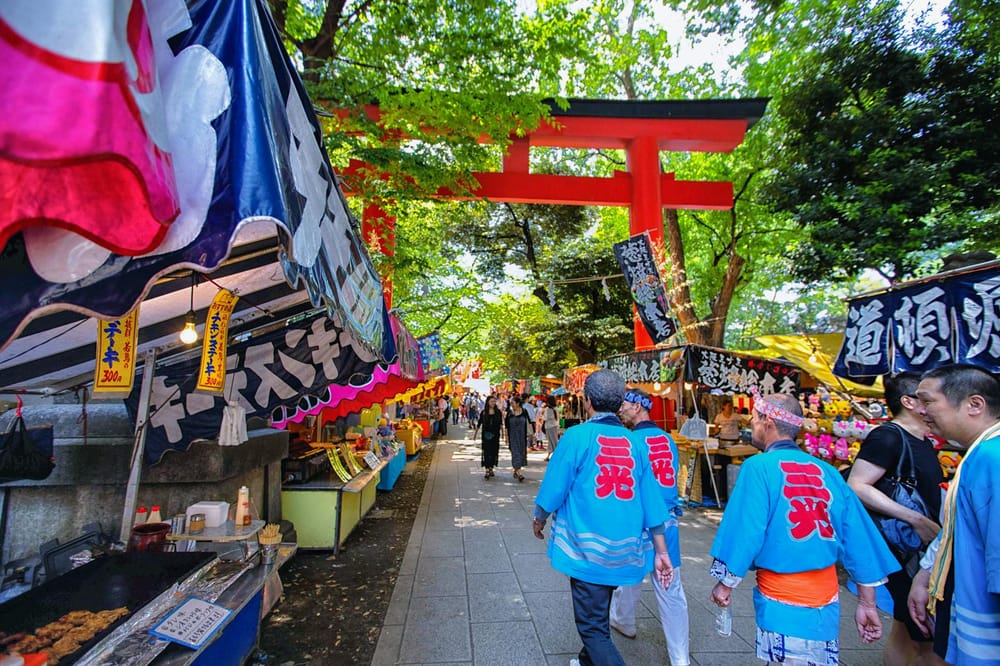
Festival food in Japan is harder to verify than chain restaurant food, and for good reason: yatai (屋台, festival stalls) are independent vendors who change recipes year to year and often source sauces in bulk from different suppliers. There is no single "festival food allergen list" to check.
So for this guide, we worked backward from ingredients. For each of the eight foods below, we identified the dominant commercial sauce or seasoning brand used by most matsuri vendors, then checked that brand's published ingredient list. For mirin (味醂), we relied on the Japan National Tax Agency's classification of hon-mirin as an alcoholic beverage under the Liquor Tax Act (酒税法) — meaning any sauce containing real mirin contains alcohol.
For each food, we list:
- The dominant ingredient risk
- The halal status under typical festival preparation
- A practical workaround (or "skip it")
- The Japanese phrase to confirm with the vendor
If you spot a vendor practice that contradicts anything below, please contact our editorial team — we update this guide each spring before matsuri season.
Why most matsuri street food is not halal-certified
Three ingredient categories cause almost every "not halal" verdict at a Japanese summer festival:
Mirin and cooking sake. Japanese savory sauces — including Worcestershire-style sauces used on takoyaki, okonomiyaki, and yakisoba — almost always contain mirin or cooking sake. Real hon-mirin (本みりん) contains roughly 14% alcohol by volume and is taxed as an alcoholic beverage in Japan. Even mirin-fu chomiryo (mirin-style seasoning), which is below 1% alcohol, is still alcohol-derived.
Pork or beef extract in "vegetable-looking" sauces. Many commercial okonomiyaki and yakisoba sauces list "pork extract" (豚エキス) or "beef extract" (牛エキス) low on the ingredient panel. Otafuku Sauce's standard okonomiyaki sauce, for example, contains oyster extract and is processed on shared lines with pork-extract sauces. The sauce looks vegetarian. It is not.
Shared frying oil. A single yatai often fries chicken karaage, squid, fries, and tempura in the same oil throughout the night. Even a plain potato item picks up cross-contamination from haram-slaughtered chicken.
The good news: several festival foods sidestep all three risks. We cover those below.
Takoyaki (たこ焼き): Sauce is not halal
Halal status: ❌ Not halal as served · ⚠ Muslim-friendly if you request no sauce and confirm batter
Risk: Takoyaki sauce contains mirin and animal-derived extracts
The classic ball-shaped octopus snack is made from a wheat batter, diced octopus (tako, 蛸), green onion, and pickled ginger. The batter itself is generally Muslim-friendly: flour, egg, dashi, and water. The problem is what goes on top.
Standard takoyaki sauce — most commonly Otafuku's Takoyaki Sauce or Bulldog's equivalent — contains mirin, soy sauce, and vegetable/fruit-based thickeners. Some commercial blends also include oyster extract or pork bone extract for umami. Mayonnaise drizzled on top is typically egg-based and halal-tolerant, but the bonito flakes (katsuobushi) are halal-neutral provided the fish is treated as permissible seafood under your madhhab.
Practical workaround: Order takoyaki sauce nuki (without sauce). You can still eat it with a sprinkle of salt, or bring your own halal soy sauce in a small bottle.
Ask the vendor: 「ソースを抜いてもらえますか?」(Sōsu o nuite moraemasu ka?) — "Could you leave off the sauce?"
If the vendor cannot remove the sauce — sometimes the takoyaki is pre-brushed in batches — skip it and try a different stall.
Taiyaki (たい焼き): Generally Muslim-friendly
Halal status: ⚠ Muslim-friendly (verify filling and shared griddle)
Risk: Custard fillings may contain gelatin; some seasonal fillings include alcohol-flavored cream
Taiyaki (literally "baked sea bream") is a fish-shaped pancake-cake hybrid filled most commonly with sweet red bean paste (anko, 餡子). The standard ingredients — wheat flour, egg, sugar, milk, baking powder, and azuki bean paste — contain no haram ingredients.
The variations are where caution helps:
- Anko (red bean) filling: Generally safe. Made from azuki beans, sugar, and salt.
- Custard filling: Usually safe, but some commercial custards use gelatin as a stabilizer. Pork-derived gelatin (豚由来ゼラチン) is common in Japan.
- Chocolate filling: Check for emulsifier E471 (mono- and diglycerides of fatty acids), which can be animal-derived in Japanese-made chocolate.
- Seasonal fillings: Liqueur-flavored custard appears in some matsuri seasons. Skip anything labeled "ラム" (rum) or "ブランデー" (brandy).
Taiyaki is usually cooked on dedicated cast-iron molds that only ever touch sweet batter, so cross-contamination risk is low.
Ask the vendor: 「中身は何ですか?ゼラチンは入っていますか?」(Nakami wa nan desu ka? Zerachin wa haitteimasu ka?) — "What's the filling? Does it contain gelatin?"
Yakisoba (焼きそば): Not halal
Halal status: ❌ Not halal
Risk: Yakisoba sauce contains mirin and pork/beef extracts; almost always cooked with pork or non-halal chicken
Yakisoba is the food that catches the most Muslim travelers off-guard at matsuri. It looks like simple stir-fried noodles with cabbage and a brown sauce — visually similar to plain Asian noodle dishes most travelers know. But the seasoning is the problem.
Commercial yakisoba sauce, such as Otafuku's standard yakisoba sauce, contains mirin and Worcestershire-style ingredients that include vegetable, fruit, and meat extracts. Yatai versions almost always include sliced pork belly (豚バラ, butabara) or non-halal chicken, even when a sign advertises "seafood yakisoba" — the meat is often added as a fat base for the wok.
There is no reliable workaround at a typical festival yakisoba stall. Asking for no meat does not remove the sauce, the pork-tainted wok, or the cross-contaminated griddle surface.
Skip yakisoba at matsuri. For a halal version, look for halal-certified Japanese restaurants that prepare yakisoba in a dedicated kitchen — several appear in the Halal Navi restaurant database.
Ringo ame (りんご飴) — candied apples: Halal
Halal status: ✅ Halal (ingredients) · ⚠ Verify food coloring on rare occasions
Risk: Essentially none for standard recipes
Ringo ame is one of the easiest matsuri foods for a Muslim traveler. The classic recipe is a fresh apple on a stick, dipped in a hard candy coating made from sugar, water, and red food coloring. That's the entire ingredient list at most stalls.
The food coloring used is typically Red 102 (新コクシニール, also called New Coccine) or beet-derived red — both plant or synthetic. Cochineal (carmine), which is insect-derived and treated as makruh or haram in several madhhabs, is uncommon in yatai ringo ame because synthetic dyes are cheaper.
Recently, festival stalls have expanded beyond apple to include grape, strawberry, and pineapple candy-coated fruits ("fruit ame", フルーツ飴). The same ingredient profile applies: fruit, sugar, water, coloring.
Ask the vendor (only if uncertain): 「着色料は何ですか?」(Chakushokuryō wa nan desu ka?) — "What food coloring do you use?"
Most vendors will not know the exact chemical name. If the answer is unclear, the candy coating is so thin that the risk profile is low for most travelers.
Jagabata (じゃがバター) — buttered potato: Generally Muslim-friendly
Halal status: ⚠ Muslim-friendly (verify butter vs. margarine)
Risk: Some stalls substitute margarine; toppings may include bacon bits or non-halal cheese
Jagabata is a whole steamed or grilled potato split open and topped with a generous slab of butter. The base — potato — is obviously halal. Real butter (バター) made from cow's milk is halal under all major Sunni schools.
Two cautions:
- Margarine substitution. Some yatai use margarine (マーガリン) instead of butter to cut costs. Margarine in Japan often contains emulsifiers that may be animal-derived. The vendor's sign will usually specify バター if it's real butter; if it just says "potato with topping" generically, ask.
- Toppings menu creep. Modern festival jagabata stalls offer optional toppings: bacon bits (ベーコン, almost always pork), shio-kara (salted squid guts, fermented), mentaiko (cod roe, halal-tolerant if not alcohol-cured), and cheese (check rennet source — most processed cheese in Japan uses microbial rennet, but verify).
Stick to plain butter and salt, or butter and black pepper, and you have one of the safest matsuri foods.
Ask the vendor: 「バターですか、マーガリンですか?」(Batā desu ka, māgarin desu ka?) — "Is it butter or margarine?"
Ikayaki (イカ焼き) — grilled squid: Sauce is not halal
Halal status: ❌ Not halal as served · ⚠ Muslim-friendly if you request salt only
Risk: Tare sauce contains mirin and soy sauce blended with cooking sake
Whole-grilled squid is a matsuri classic. Squid itself is considered halal seafood by most Sunni scholars (though a minority Hanafi position treats only fish as halal — check your madhhab). The issue is the basting sauce.
Ikayaki tare (タレ) is typically a blend of soy sauce, mirin, sugar, and cooking sake (ryōrishu, 料理酒). The cooking sake is the most clearly haram component — it is sold and taxed as an alcoholic beverage in Japan, with roughly 13–14% alcohol by volume.
Practical workaround: Ask for salt-only preparation (shio yaki, 塩焼き). Some yatai will do this; others have the tare pre-brushed and can't accommodate. The grill surface itself may carry residue from previous tare-brushed squid, so a strict observance traveler may want to skip ikayaki entirely.
Ask the vendor: 「ソースにアルコールかみりんは入っていますか?塩焼きにできますか?」(Sōsu ni arukōru ka mirin wa haitteimasu ka? Shioyaki ni dekimasu ka?) — "Does the sauce contain alcohol or mirin? Can you grill it with salt only?"
Furaido poteto (フライドポテト) — long fries: Oil-dependent
Halal status: ❓ Unconfirmed — depends entirely on the individual stall's oil
Risk: Fryer often shared with karaage (fried chicken) or other meat items
The extra-long, mochi-textured festival fries are visually unique to matsuri — a different product from the chain-restaurant fry. The potato and the salt are halal. The oil and the fryer are the unknowns.
Two questions matter:
- What oil? Plant-based oils (canola, soy, sunflower) are halal. Beef tallow or lard-blended oils are not. Most festival fry stalls use plant oil for cost reasons, but it is worth asking.
- What else gets fried in this oil? Many yatai run a single oil pot all night, frying chicken karaage, gyoza, squid, and fries in rotation. Even with plant oil, the cross-contamination from non-halal chicken makes the fries not halal under a strict interpretation.
Ask the vendor: 「同じ油で鶏の唐揚げを揚げていますか?」(Onaji abura de tori no karaage o agete imasu ka?) — "Do you fry chicken karaage in the same oil?"
If yes, skip. If the stall is fries-only or fries-plus-vegetable-tempura only, you're more likely safe — but ask about the oil base as a second confirmation.
Kakigori (かき氷) — shaved ice: Halal
Halal status: ✅ Halal (ingredients) · ⚠ Verify condensed-milk-based syrups
Risk: Some premium syrups include liqueur; condensed milk is halal but verify if served separately
Kakigori is the perfect way to end a hot matsuri evening. The base is shaved ice and a flavored syrup, both of which are halal in their standard form. Common syrup flavors at festival stalls — strawberry, melon, blue Hawaii, lemon, matcha — are sugar syrups with food coloring and natural or artificial flavoring.
Watch for:
- Premium "adult" syrups. Some upscale kakigori stalls offer rum-syrup, amaretto, or other liqueur-based toppings. These are clearly labeled with the liqueur name and easy to avoid.
- Condensed milk drizzle (練乳). Standard condensed milk is just milk and sugar — halal. But some flavored condensed milks include rum extract; ask if it tastes unusual.
- Mochi or anko toppings. Both are generally halal, same caveats as taiyaki for gelatin in any cream filling.
Ask the vendor: 「シロップにアルコールは入っていますか?」(Shiroppu ni arukōru wa haitteimasu ka?) — "Does the syrup contain alcohol?"
Comparison: Matsuri street food halal status at a glance
| Food | Halal status | Main risk | Safest order |
|---|---|---|---|
| Takoyaki (たこ焼き) | ❌ Not halal as served | Sauce contains mirin and extracts | Sauce-nuki (no sauce), salt only |
| Taiyaki (たい焼き) | ⚠ Muslim-friendly | Gelatin in custard fillings | Anko (red bean) filling |
| Yakisoba (焼きそば) | ❌ Not halal | Sauce + pork + shared wok | Skip entirely |
| Ringo ame (りんご飴) | ✅ Halal | Rare insect-derived coloring | Standard apple-on-stick |
| Jagabata (じゃがバター) | ⚠ Muslim-friendly | Margarine substitution, bacon toppings | Plain butter + salt |
| Ikayaki (イカ焼き) | ❌ Not halal as served | Tare contains cooking sake | Salt-only (shioyaki) if available |
| Long fries (フライドポテト) | ❓ Unconfirmed | Shared oil with karaage | Ask about fryer use |
| Kakigori (かき氷) | ✅ Halal | Liqueur in premium syrups | Standard fruit syrup |
Three phrases to memorize before your matsuri night
If you remember nothing else from this guide, take these three Japanese phrases. They cover roughly 90% of the situations a Muslim traveler will face at a yatai:
- 「豚肉やアルコールは入っていますか?」 (Butaniku ya arukōru wa haitteimasu ka?) — "Does this contain pork or alcohol?"
- 「ソースを抜いてもらえますか?」 (Sōsu o nuite moraemasu ka?) — "Could you leave off the sauce?"
- 「同じ油で肉を揚げていますか?」 (Onaji abura de niku o agete imasu ka?) — "Do you fry meat in the same oil?"
Most matsuri vendors are friendly and used to dietary questions from international visitors — Japan has hosted millions of Muslim travelers in recent years and many yatai operators have encountered the questions before. A polite tone, a smile, and showing a written version of the question on your phone usually gets a clear answer.
For situations where the language gap is too wide, carry a printed Muslim dietary card in Japanese.
Halal-certified alternatives during festival season
If the matsuri food landscape feels too uncertain on a given evening, several halal-certified restaurants near major Tokyo festival venues offer a reliable fallback. Examples from our editorial database include:
- Asakusa area (near the Sumida River Fireworks Festival, late July): Several halal-certified restaurants are listed on the Halal Navi database within walking distance of Asakusa Station.
- Ueno area (near Shinobazu Pond and Ueno Park summer events): The Okachimachi and Ueno area has a growing concentration of halal-certified options, with new openings each year. We re-verify the list quarterly.
- Shinjuku-Gyoenmae area (near Shinjuku Gyoen summer events): Several halal ramen and Japanese cuisine restaurants operate in this district.
Specific restaurant recommendations rotate as openings and closings change. Always check the live listing on the Halal Navi platform before planning your route, rather than relying on a static list.
Frequently Asked Questions
Is takoyaki halal in Japan?
Takoyaki is not halal as it is normally served at festivals. The takoyaki batter itself is generally Muslim-friendly (wheat flour, egg, dashi, octopus), but the standard takoyaki sauce contains mirin (a Japanese cooking alcohol) and often pork or oyster extract for umami. Order sauce nuki (no sauce) to make it Muslim-friendly, or skip it.
Does Japanese festival yakisoba contain pork?
Yes, in most cases. Yatai yakisoba almost always includes sliced pork belly or non-halal chicken, even when the sign advertises "seafood yakisoba." The yakisoba sauce also contains mirin and meat-extract ingredients. We recommend skipping yakisoba entirely at matsuri.
Is mirin halal? It's used in cooking, not for drinking.
Real hon-mirin (本みりん) is classified as an alcoholic beverage under Japan's Liquor Tax Act and contains approximately 14% alcohol by volume. The majority position among contemporary halal certification bodies, including Japan Halal Foundation and NPO Japan Halal Association, is that food containing hon-mirin is not halal. Even "mirin-style seasoning" (mirin-fu chomiryo), which is below 1% alcohol, derives from alcohol production and is generally avoided by halal-certified establishments.
Are candied apples (ringo ame) at Japanese festivals halal?
Yes, ringo ame is one of the safest matsuri foods. The standard recipe is fresh apple, sugar, water, and red food coloring — no animal-derived ingredients, no alcohol. The food coloring is typically synthetic Red 102 or beet-derived, both of which are halal. Some rare premium versions use cochineal (carmine), an insect-derived dye that is treated as makruh or haram depending on madhhab.
Can I eat kakigori (shaved ice) at a matsuri?
Yes. Standard kakigori is shaved ice plus fruit-flavored sugar syrup — both halal. Avoid premium "adult" syrups that include rum or amaretto (clearly labeled). Condensed milk drizzle is halal. If matcha-flavored, the matcha powder is plain green tea and halal.
How do I ask a Japanese festival vendor if food is halal?
The most useful phrase is 「豚肉やアルコールは入っていますか?」(Butaniku ya arukōru wa haitteimasu ka?), meaning "Does this contain pork or alcohol?" For shared-oil questions, ask 「同じ油で肉を揚げていますか?」(Onaji abura de niku o agete imasu ka?) — "Do you fry meat in the same oil?" Most yatai staff in major cities will answer clearly, especially in Tokyo, Osaka, and Kyoto where international visitors are common.
Are there any fully halal-certified yatai at Japanese matsuri?
Halal-certified yatai are rare but increasing. A handful of festivals in Tokyo and Saitama have hosted dedicated halal stalls in recent years, often operated by Muslim-owned restaurants as a seasonal expansion. These are not consistent year to year. Check the Halal Navi database close to your travel dates for the current season's listings.
What about Japanese fried chicken (karaage) at festivals?
Festival karaage is not halal. The chicken is not halal-slaughtered, and the marinade typically includes cooking sake and soy sauce blended with mirin. Even if you find a stall using plant-based oil, the chicken itself is the disqualifier. For halal karaage, look to halal-certified Japanese restaurants, several of which serve karaage as a featured item.
Verdict
Japanese summer matsuri are one of the most rewarding cultural experiences a Muslim traveler can have in Japan — the yukata, the fireworks, the lantern light along the river. The food landscape is more constrained than it looks, but it's not closed.
The reliable pattern: build your matsuri meal around the green-light foods — ringo ame, kakigori, plain taiyaki, and jagabata with real butter. Treat takoyaki and ikayaki as conditional yeses if the vendor will accommodate a sauce-free or salt-only preparation. Skip yakisoba and karaage entirely. For substantive meals, walk ten minutes away from the festival grounds to a halal-certified restaurant before returning to the lanterns.
The phrase to take with you: 「豚肉やアルコールは入っていますか?」 Six words. They unlock most of Japan.
Sources & references
- Japan National Tax Agency — Hon-mirin classification under the Liquor Tax Act (酒税法). nta.go.jp, accessed May 13, 2026. Accessed 2026-05-16.
- Otafuku Sauce Co. — Takoyaki Sauce official ingredient page. otafuku.co.jp/product/takoyaki.html, accessed May 13, 2026. (URL no longer accessible — verified 2026-05-16.)
- Otafuku Sauce Co. — Yakisoba Sauce official ingredient page. otafuku.co.jp/product/yakisoba.html, accessed May 13, 2026. (URL no longer accessible — verified 2026-05-16.)
- Otafuku Sauce Co. — Okonomiyaki Sauce official ingredient page. otafuku.co.jp/product/okonomi.html, accessed May 13, 2026. (URL no longer accessible — verified 2026-05-16.)
- NPO Japan Halal Association (日本ハラール協会) — certified product and restaurant database. jhalal.com, accessed May 13, 2026. Accessed 2026-05-16.
- Halal Navi restaurant database — halal-navi.com, accessed May 13, 2026. Accessed 2026-05-16.
About this article
Author: Aisha Rahman writes for Halal Navi's editorial team and has covered halal food in Japan since 2021, including yatai food at Tokyo, Saitama, and Osaka summer festivals.
Reviewer: This article was reviewed by Halal Navi's Halal Verification Team, which cross-checks each ingredient claim against primary sources before publication. See our editorial standards for the full review process.
Update policy: We re-verify every claim in this article each spring before matsuri season. If you spot outdated information or a vendor practice that contradicts our guidance, please contact us and we will investigate within 7 days.
Disclosure: Halal Navi receives no advertising revenue from any sauce manufacturer, restaurant, or food vendor mentioned in this article. Rankings and verdicts reflect independent editorial judgment based on cited primary sources.
Last verified: 2026-05-13