Halal Chicken Katsu Recipe: Easy Japanese Cutlet at Home (2026)
Quick Answer: Chicken katsu (チキンカツ, chikin katsu) is a breaded, deep-fried chicken cutlet, and it is the halal-friendly cousin of Japan's pork-based tonkatsu. The recipe is simple: butterfly halal chicken breast, season, dredge in flour, egg, then panko, and deep-fry until golden. The two halal pitfalls to watch are (1) sourcing properly slaughtered halal chicken in Japan, and (2) choosing an alcohol-free sauce, because most supermarket tonkatsu sauces contain distilled vinegar made from alcohol. Both are solved below.
✅ Halal-Verified by Zeshan Hayat
Lead Halal Auditor, Halal Navi · Founder, HHAJ (Halal Hayat Association Japan, 2020)
Credentials: MPJA Halal Auditor · ISO 9001:2015 Internal Auditor · ISO 19011 Auditor
See full credentials and audit methodology →**Written by** Aisha Rahman, Halal Navi Editorial Team
**Published** May 14, 2026 · **Last verified** May 14, 2026
**Methodology**: Every ingredient and supplier referenced in this recipe was cross-checked against the manufacturer's published ingredient list, halal certification body database, or the supplier's own current website in May 2026. Halal panko options were confirmed against JAKIM-recognized Malaysian production, and the Bull-Dog tonkatsu sauce ingredient analysis is based on the manufacturer's own published label.
How we verified every ingredient in this recipe
Before publishing any recipe, the Halal Navi editorial team checks each ingredient against three layers of evidence, because for halal home cooking the smallest substitution (a splash of mirin, a non-halal stock cube) can change the entire dish's status.
For this chicken katsu recipe, we checked:
- The chicken supplier: confirmed via Tokyo-based halal butchers' own current websites and their stated slaughter practices.
- The panko: cross-referenced against published ingredient lists from major manufacturers, and against existing halal certification (JAKIM for Malaysian-produced panko; community-verified guidance from Halal Japan for Japanese brands).
- The sauce: read the official Bull-Dog Sauce Co. ingredient list as printed on bottles sold worldwide, and compared it against alcohol-free homemade alternatives.
If anything below changes after our publication date, please contact our editorial team and we will update the recipe within seven days.
What is chicken katsu, and why is it the go-to halal alternative to tonkatsu?
Chicken katsu (チキンカツ, chikin katsu) is a Japanese cutlet made by breading and deep-frying a flattened piece of chicken breast or thigh. The outside is crisp and shatteringly light because of panko (パン粉), Japan's airy flaked breadcrumb; the inside stays juicy because the meat is pounded thin and cooked quickly.
The name "katsu" comes from the Japanese pronunciation of "cutlet," and the most famous version in Japan is tonkatsu, the pork cutlet (ton = pork, katsu = cutlet). For Muslim home cooks in Japan, tonkatsu is off the menu, but the technique transfers cleanly to halal chicken, giving you a teishoku-style dinner of crisp cutlet, shredded cabbage, miso soup, and steamed rice. Chicken katsu also doubles as the standard topping for katsu curry (カツカレー), one of Japan's most popular comfort meals.
The recipe itself is one of the easiest entry points into Japanese home cooking. The only real care points are halal sourcing and the sauce, both covered below.
Ingredients (serves 2)
For two servings:
- 2 pieces of halal-certified skinless chicken breast (about 200 g each)
- Salt and freshly ground black pepper, to taste
- 3 tbsp all-purpose flour (薄力粉, hakurikiko)
- 1 large egg, beaten
- 1 cup halal-certified panko breadcrumbs (パン粉)
- Neutral oil for deep-frying (rice bran oil or canola; enough for 3–4 cm depth)
- Shredded green cabbage and steamed rice, to serve
- Halal tonkatsu-style sauce (homemade, see Step 5 below)
Where to buy halal chicken in Tokyo
Halal-certified chicken can be hard to find in mainstream Japanese supermarkets, but several established halal suppliers serve the Tokyo area:
- Nasco Halal Food operates two branches in Shinjuku-ku, Hyakunin-cho (very near JR Shin-Okubo station) and ships nationwide. Nasco has supplied halal meat and food since 1992 and slaughters and processes meat in accordance with Islamic guidelines.
- Al-Flah Super Market in Ikebukuro (2-41-2 Ikebukuro, Toshima-ku) sells halal chicken alongside South Asian groceries and offers online ordering with home delivery.
- Tokyo Camii Halal Market, attached to Tokyo Camii in Yoyogi-Uehara, stocks frozen halal chicken breast and other cuts sourced from certified producers.
For convenience, frozen halal chicken breast from any of the three works perfectly for chicken katsu; thaw fully in the fridge overnight before use.
How to choose halal panko
Pure plain panko is usually a simple mix of wheat flour, yeast, sugar, salt, and shortening, and contains no animal-derived ingredients. However, halal-conscious cooks should still look for explicit certification or community verification, because some seasoned or premium panko products add flavorings of uncertain origin.
Two confirmed-halal options:
- Fry Top Panko (Malaysia) — JAKIM-certified halal panko with a simple wheat-flour-and-yeast base, widely available in Asian grocery stores.
- Nissin Soft Panko (Japan) — community-reviewed by Halal Japan (run by Mufti Mohammad Anas) as suitable for Muslim consumption.
If you cannot find either, look for a panko whose ingredient list is limited to wheat flour, yeast, sugar, salt, and a vegetable-based shortening, and check that the shortening is not animal-derived.
How to cook halal chicken katsu in 5 steps
Step 1. Butterfly and pound the chicken
Place each chicken breast flat on a cutting board and slice horizontally most of the way through, opening it like a book. Cover with plastic wrap and pound gently with a rolling pin or the flat side of a heavy knife until the meat is an even 1–1.5 cm thick. Even thickness is the single most important step for a juicy interior, because thin parts overcook while thick parts stay raw.
Step 2. Season
Season both sides generously with salt and a few grinds of black pepper. Let the chicken rest for 5 minutes at room temperature so the salt begins to draw out a little moisture, which helps the coating stick.
Step 3. Three-stage coating (flour → egg → panko)
Set up three shallow plates: one with flour, one with the beaten egg, and one with panko. Working one piece at a time:
- Dredge the chicken in flour and tap off the excess.
- Dip into the beaten egg, letting excess drip back into the plate.
- Press firmly into the panko, coating both sides and the edges. Press the panko into the meat, do not just sprinkle it on.
Step 4. Deep-fry
Heat the neutral oil to about 170–175°C (340–350°F) in a deep frying pan or wok. If you do not have a thermometer, drop one panko crumb in — it should sizzle steadily and float without browning instantly.
Carefully lower one chicken piece into the oil and fry for about 2 minutes per side, flipping once, until both sides are deep golden brown and the internal temperature reaches 75°C (165°F). Drain on a wire rack rather than paper towels, so the bottom stays crisp.
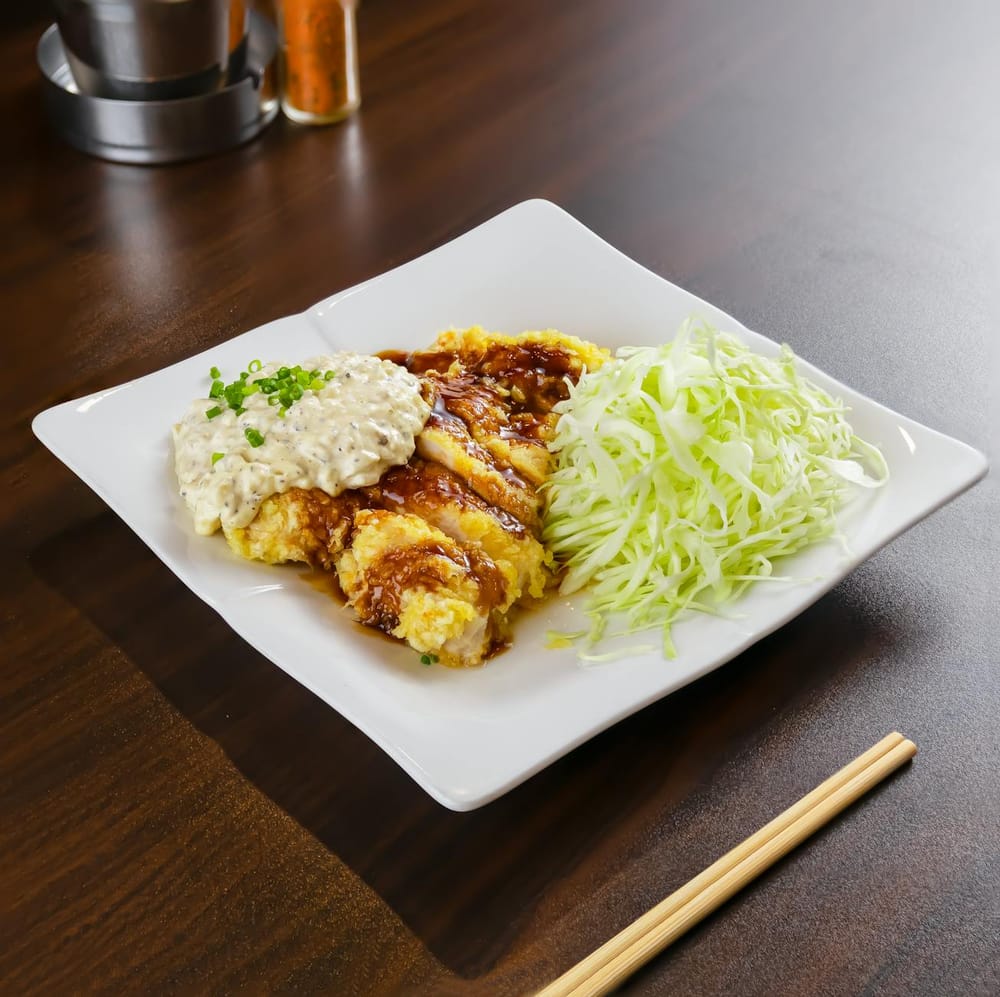
Slice crosswise into 2 cm strips with a sharp knife.
Step 5. Halal tonkatsu-style sauce (the important fix)
This is the step where most halal home cooks slip up.
The problem: the iconic supermarket tonkatsu sauce, Bull-Dog Tonkatsu Sauce, lists its ingredients as "water, high fructose corn syrup, sugar, distilled vinegar (made from alcohol), tomato paste, salt, modified rice starch, apple puree, yeast extract, prune paste, spices, carrots, onions, lemon juice", on the manufacturer's own label. The "distilled vinegar (made from alcohol)" disclosure is why the standard bottle cannot be considered halal-certified, and many traditional tonkatsu sauces also contain mirin (rice wine). One halal recipe blog explicitly notes that "the original sauce... most of them, if not all, have mirin (rice wine/ alcohol) in their ingredients list," making them unsuitable for Muslims.
The solution: make a one-minute halal tonkatsu-style sauce. In a small bowl, whisk together:
- 3 tbsp halal Worcestershire-style sauce (check the label — choose one without alcohol or mirin)
- 2 tbsp ketchup
- 1 tbsp oyster sauce (halal-certified) or, for a fish-based alternative, 1 tbsp soy sauce plus a pinch of sugar
- 1 tsp Dijon mustard
- 1 tsp sugar
Adjust to taste; it should be thick, sweet-tangy, and dark brown. Spoon over the sliced chicken or serve on the side. Halal-certified bottled tonkatsu-style sauces also exist in international halal grocery stores; check the label for an explicit halal mark and the absence of mirin or alcohol-derived vinegar.
Serving suggestions
The classic teishoku presentation is a wedge of finely shredded green cabbage to the side, a bowl of steamed short-grain rice, and a small bowl of miso soup. A lemon wedge brightens the dish and cuts the richness of the fried coating.
Three popular variations:
- Katsu curry (カツカレー): serve the sliced chicken katsu on top of Japanese curry over rice. Use a halal-certified Japanese curry roux block or paste, since many supermarket roux contain beef extract from non-halal sources or alcohol-derived flavorings.
- Katsu sando (カツサンド): sandwich the cutlet between two slices of milk bread spread with halal mayonnaise and a swipe of the homemade sauce. A Tokyo lunchbox classic.
- Katsu don (カツ丼): simmer the sliced cutlet briefly in a dashi-soy sauce with onions, then slide it over rice with a softly-cooked egg poured on top. Use a halal-certified dashi powder, since some commercial dashi contains alcohol.
Halal status at a glance: chicken katsu ingredients
| Ingredient | Halal status | Notes |
|---|---|---|
| Chicken breast | ✅ Confirmed halal (when sourced from certified halal butcher) | Verified via Nasco, Al-Flah, Tokyo Camii Halal Market |
| Plain flour | ✅ Confirmed halal | No animal ingredients |
| Egg | ✅ Confirmed halal | — |
| Panko (Fry Top, Nissin Soft Panko) | ✅ Confirmed halal | Fry Top is JAKIM-certified; Nissin Soft Panko reviewed by Halal Japan |
| Rice bran or canola frying oil | ✅ Confirmed halal | Use a fresh fryer; avoid shared oil with non-halal items |
| Bull-Dog Tonkatsu Sauce | ❌ Not halal | Contains distilled vinegar made from alcohol per manufacturer label |
| Homemade halal tonkatsu-style sauce | ✅ Confirmed halal | When all components (Worcestershire, oyster sauce, etc.) are individually halal |
| Shredded cabbage | ✅ Confirmed halal | — |
Frequently Asked Questions
Is chicken katsu halal?
Chicken katsu is halal when (1) the chicken itself is halal-slaughtered, (2) the panko, flour, and oil contain no animal-derived or alcohol-derived ingredients, and (3) the sauce is alcohol-free. The dish concept has no inherent halal issues, unlike tonkatsu which is pork-based.
Where can I buy halal chicken in Tokyo?
Reliable Tokyo halal butchers include Nasco Halal Food (two Shinjuku branches in Hyakunin-cho, near JR Shin-Okubo station), Al-Flah Super Market (Ikebukuro, Toshima-ku), and the Tokyo Camii Halal Market at Tokyo Camii. All three sell halal chicken breast suitable for chicken katsu and offer online ordering.
Is Bull-Dog tonkatsu sauce halal?
No. According to Bull-Dog's own published ingredient list, the sauce contains "distilled vinegar (made from alcohol)." Although the alcohol is consumed in the vinegar fermentation process, the explicit "made from alcohol" disclosure makes this product unsuitable for halal-conscious Muslims. Use the homemade alcohol-free alternative in Step 5 instead.
Is panko halal?
Plain panko made only from wheat flour, yeast, sugar, salt, and vegetable shortening is generally halal. Confirmed-halal options include Fry Top Panko, which is JAKIM-certified in Malaysia. Nissin Soft Panko has been reviewed by Halal Japan as suitable for Muslim consumption. Always check the ingredient list of seasoned or premium panko, which may contain non-halal flavorings.
Can I use chicken thigh instead of breast?
Yes. Boneless, skinless halal chicken thigh produces a juicier katsu but is slightly oilier. Reduce the frying time by about 30 seconds per side because thigh meat cooks faster than breast.
What oil should I use for deep-frying halal chicken katsu?
Rice bran oil (米油, kome-abura) is the traditional Japanese choice for its mild flavor and high smoke point; canola or sunflower oil also works. Avoid lard, beef tallow, or any shortening of unspecified animal origin. If you cook for a mixed household, dedicate a separate fryer or oil bottle to your halal cooking to prevent cross-contamination.
How do I keep chicken katsu crispy?
Drain on a wire rack rather than paper towels, and slice only just before serving. If reheating, use an oven at 180°C (350°F) for 5–7 minutes; the microwave will make the coating soggy.
Can I bake or air-fry chicken katsu instead of deep-frying?
Yes. For air-frying, lightly spray the breaded chicken with neutral oil and cook at 200°C (390°F) for about 10 minutes, flipping halfway. For oven-baking, place on a wire rack over a tray and bake at 200°C for 15–18 minutes. The texture is slightly less shattering than deep-fried, but the dish remains crisp and the halal sourcing rules are identical.
Verdict
Chicken katsu is one of the most beginner-friendly halal Japanese recipes you can cook at home, and once you have a trusted source for halal chicken and a homemade alcohol-free sauce, it slots straight into the weekly rotation. The two non-negotiables are (1) certified halal chicken from a reliable supplier such as Nasco, Al-Flah, or Tokyo Camii Halal Market, and (2) skipping the standard Bull-Dog bottle in favor of a five-ingredient homemade tonkatsu-style sauce.
Tag us on Instagram @halalnavi when you make it — we love seeing readers' versions, and we use community feedback to improve every recipe we publish.
Sources & references
- Bull-Dog Sauce Co. official tonkatsu sauce ingredient list, via Open Food Facts — openfoodfacts.org, accessed May 14, 2026
- Drizzling Flavor — Easy Homemade Tonkatsu Sauce (Halal Recipe), accessed May 14, 2026
- Nasco Halal Food official website — nascohalalfood.com, accessed May 14, 2026
- Al-Flah Super Market official website — al-flah.com, accessed May 14, 2026
- Tokyo Camii Halal Market — halalmarket.tokyocamii.org, accessed May 14, 2026
- OKC The Food Company — JAKIM-certified Fry Top Panko product page, accessed May 14, 2026
- Halal Japan (Mufti Mohammad Anas) — Nissin Soft Panko review, accessed May 14, 2026
- Food Diversity Today — 3 Places to Buy Halal Meats in Tokyo, accessed May 14, 2026
About this article
Author: Aisha Rahman is a pen name used by the Halal Navi editorial team to maintain consistency across our halal verification reporting. Editorial responsibility is held collectively by our Halal Verification Team, and every recipe we publish is tested in-house before going live.
Reviewer: Halal-reviewed by Zeshan Hayat (Lead Halal Auditor, Halal Navi / Founder, HHAJ). Zeshan holds MPJA Halal Auditor, ISO 9001:2015 Internal Auditor, and ISO 19011 Auditor credentials.
Update policy: We re-verify every ingredient and supplier in this recipe quarterly against the manufacturer's published label or the supplier's current website. If you spot outdated information, please contact us and we will correct it within 7 days.
Disclosure: Halal Navi receives no advertising revenue from any brand or supplier mentioned in this article. The previous version of this recipe included affiliate referral links to a third-party shopping platform; those have been removed in this 2026 rewrite, and the current edition contains no affiliate links. Recommendations reflect independent editorial judgment by the Halal Navi Halal Verification Team.
Last verified: 2026-05-14