Muslim-Friendly Japanese Snacks: 2026 Souvenir Guide
Quick Answer: A small group of Japanese snack brands publish ingredient disclosures detailed enough for Muslim travelers to assess them. As of May 2026, we re-verified eight popular souvenir snacks against the manufacturer's own ingredient pages, including Meiji's pudding and chocolate lines, Bourbon's Alfort and Chocolate Chip Cookies, Lotte's Koala's March, Koikeya Karamucho Hot Chilli, and Royce' Pure Chocolate and Potatochip Chocolate. None hold halal certification for the Japan-market versions, so we explain exactly what to check on each label and what to ask before you buy.
✅ Halal-Verified by Zeshan Hayat
Lead Halal Auditor, Halal Navi · Founder, HHAJ (Halal Hayat Association Japan, 2020)
Credentials: MPJA Halal Auditor · ISO 9001:2015 Internal Auditor · ISO 19011 Auditor
See full credentials and audit methodology →**Written by** [Aisha Rahman](/about/#pen-name-disclosure), Halal Navi Editorial Team
**Published** May 13, 2026 · **Last verified** May 13, 2026
**Status of every snack reviewed against** the manufacturer's own ingredient disclosure page (Meiji, Bourbon, Lotte, Koikeya, Royce'), Japan's Food Labeling Act allergen requirements, and — where applicable — halal certification body databases. Every URL in this guide was last opened on May 13, 2026.
How we verified each snack for this guide
For halal-conscious travelers, an "I read it on a blog once" claim is not enough. Ingredients change, suppliers change, and certifications expire. Here is what we did for every snack listed below.
- We opened the manufacturer's current Japanese-language product page and read the most recent published ingredient list (原材料名) and allergen statement.
- We cross-checked against Japan's Food Labeling Act (食品表示法), which requires manufacturers to disclose all ingredients in descending order by weight, plus eight mandatory allergens.
- Where a halal certification was claimed in older sources, we checked the current certifier database. If the certification could not be confirmed today, we removed the claim and replaced it with "ingredient-based assessment only".
- We flagged the four ingredient categories most likely to cause issues for Muslim travelers: animal-derived emulsifiers (乳化剤), gelatin (ゼラチン), shortening (ショートニング), and alcohol-derived flavorings including ethanol used as a preservative.
If you spot a change on a current package that contradicts what we wrote, please contact our editorial team. We re-verify this guide twice a year.
Important: "Muslim-friendly" is not the same as halal-certified
Before the list, one critical clarification. None of the snacks below carry halal certification from a Japanese or international certifier for their Japan-market versions, as of May 2026. The term "Muslim-friendly" here means:
- The ingredient list, as currently published by the manufacturer, does not contain pork, lard, gelatin, or alcohol-based flavorings.
- Emulsifiers and shortenings are stated by the manufacturer to be plant-derived.
- The factory may still process other products containing haram ingredients on shared lines.
If you require a fully halal-certified souvenir, look for products at airport halal corners or specialty Muslim grocers in Tokyo. For everything else, this guide will tell you what to read on the back of the box.
For a useful background on the difference between Muslim-friendly and certified halal, see Japan Halal Foundation and NPO Japan Halal Association.
1. Meiji Pudding (明治プリン)
Status: ⚠ Muslim-friendly per current ingredient disclosure · Not certified
Last verified: May 13, 2026
Source: Meiji official product page
Meiji's chilled pudding cups are sold in nearly every Japanese supermarket and convenience store. According to Meiji's published ingredient list, the standard Meiji Pudding contains sugar, dairy products (milk and cream), egg, caramel syrup, and a thickener. It does not list gelatin in the standard cup version, and the published emulsifier is plant-derived.
What to check on the cup before buying:
- Confirm "ゼラチン" (gelatin) is not in the 原材料名 list. Seasonal or premium variants sometimes add it.
- Confirm "洋酒" (Western liquor) or "ラム酒" (rum) is absent — this can appear in seasonal flavors such as caramel rum.
- Note the "アレルゲン" (allergen) statement: standard Meiji Pudding lists milk and egg.
A practical caveat: Meiji Pudding is sold chilled, so it is not a take-home souvenir for international flights. Eat it during your stay.
2. Meiji Macadamia and Almond Chocolate (明治マカダミア・アーモンドチョコレート)
Status: ⚠ Muslim-friendly per current ingredient disclosure · Not certified
Last verified: May 13, 2026
Source: Meiji chocolate product line
Meiji's boxed Macadamia Chocolate and Almond Chocolate are among Japan's most popular gift chocolates. According to Meiji's current published ingredient list, both products use milk chocolate, sugar, cocoa butter, whole milk powder, the named nut, and a plant-derived emulsifier (lecithin, レシチン). There is no listed alcohol-based flavoring on the standard Japan-market box.
What to check on the box before buying:
- Look for "乳化剤(大豆由来)" — emulsifier (soy-derived). This is the plant-based confirmation.
- Avoid limited-edition seasonal versions (Christmas, Valentine's) that sometimes add brandy or rum extract — these will list "洋酒" or "ブランデー".
- The factory also produces products containing alcohol; there is no published statement of segregation. Decide based on your personal threshold.
These travel well, are widely available, and make a solid gift box choice for friends and family at home.
3. Koikeya Karamucho Hot Chilli (湖池屋 カラムーチョ ホットチリ味)
Status: ⚠ Muslim-friendly per current ingredient disclosure · Not certified · Hot Chilli flavor only
Last verified: May 13, 2026
Source: Koikeya Karamucho official page
Karamucho is one of Japan's iconic spicy potato snacks. According to Koikeya's published ingredient page, only the Hot Chilli flavor (ホットチリ味) is free of animal-derived ingredients in the current formulation. Other Karamucho flavors, including Stick and certain regional editions, contain chicken extract, pork-derived seasonings, or beef extract — these are not Muslim-friendly.
What to check on the bag before buying:
- Confirm the flavor name is "ホットチリ味" (Hot Chilli). Other Karamucho variants are different products with different recipes.
- Read the 原材料名 line. The Hot Chilli flavor lists potato, vegetable oil, sugar, salt, chilli pepper, garlic, onion, and seasoning. Confirm no "ポークエキス" (pork extract), "チキンエキス" (chicken extract), or "ビーフエキス" (beef extract) is listed.
- The vegetable oil is published as plant-derived (palm and corn).
Watch for: Koikeya occasionally releases limited-edition Karamucho flavors at convenience stores. These limited editions may use different seasonings, so always re-check the back of the bag.
4. Lotte Koala's March (ロッテ コアラのマーチ)
Status: ⚠ Muslim-friendly per current ingredient disclosure (original chocolate flavor) · Not certified
Last verified: May 13, 2026
Source: Lotte Koala's March official page
Lotte Koala's March, with its illustrated koala biscuits, is a classic Japan souvenir. According to Lotte's current published ingredient list, the original chocolate flavor uses wheat flour, sugar, cocoa mass, vegetable oil, whole milk powder, lecithin (plant-derived emulsifier), and leavening agents. No gelatin, no alcohol-based flavoring, and no animal-derived emulsifier appear on the standard chocolate flavor.
What to check on the box before buying:
- Confirm you are looking at the original chocolate flavor. Strawberry cream, custard, and certain seasonal fillings have different ingredient profiles and may contain animal-derived emulsifiers.
- The package will list "乳化剤(大豆由来)" for the plant-based emulsifier.
- The factory line is shared with milk and wheat allergens; no published statement of halal segregation.
Koala's March travels well, comes in convenient gift packs, and is one of the safer choices for a souvenir box.
5. Royce' Pure Chocolate
Status: ⚠ Muslim-friendly per current ingredient disclosure · Not certified for Japan-market product
Last verified: May 13, 2026
Source: Royce' Confect official site
Royce' is a Hokkaido-based chocolatier whose Pure Chocolate boxes are sold at major Japanese airports and department stores. According to Royce's current ingredient page, Pure Chocolate uses cocoa mass, sugar, whole milk powder, cocoa butter, and lecithin (plant-derived). The standard Pure Chocolate line does not list alcohol or gelatin.
Important nuance: Some Royce' product lines do contain alcohol — particularly the Nama Chocolate "Au Lait" and certain liqueur-infused variants. Royce' clearly labels these with "洋酒" (Western liquor) on the package. Do not assume the entire Royce' brand is alcohol-free; check each box individually.
What to check before buying:
- Confirm the product name on the box is "Pure Chocolate" (ピュアチョコレート).
- Read the 原材料名 line and confirm no "洋酒" or "リキュール" appears.
- The Royce' shop staff at airport corners can usually point you to the alcohol-free range; ask "お酒が入っていないものはどれですか" (Which of these do not contain alcohol?).
6. Bourbon Alfort (ブルボン アルフォート)
Status: ⚠ Muslim-friendly per current ingredient disclosure · Not certified
Last verified: May 13, 2026
Source: Bourbon Alfort official page
Bourbon's Alfort biscuits — a wholewheat-style cookie topped with a thick milk chocolate layer — are a long-running Japanese supermarket staple. According to Bourbon's current published ingredient list, the standard milk Alfort uses wheat flour, sugar, vegetable oil and fat, cocoa mass, whole milk powder, cocoa butter, lecithin (plant-derived), and leavening agents. There is no listed gelatin or alcohol-based flavoring on the standard milk variant.
What to check on the pack before buying:
- Confirm you have the standard milk variant (ミルク). Some seasonal Alfort editions have rum-raisin or wine-infused chocolate layers.
- Confirm "乳化剤(大豆由来)" appears, indicating plant-based emulsifier.
- The "ショートニング" (shortening) listed by Bourbon for Alfort is published as vegetable-derived.
Older social-media-based halal confirmations from the mid-2010s are outdated; we recommend treating Alfort as ingredient-verified Muslim-friendly rather than certified.
7. Bourbon Chocolate Chip Cookies and Butter Cookies (ブルボン チョコチップクッキー / バタークッキー)
Status: ⚠ Muslim-friendly per current ingredient disclosure · Not certified
Last verified: May 13, 2026
Source: Bourbon cookies brand page
Bourbon's everyday cookie tins, sold in tray-pack form at supermarkets and convenience stores, are a budget-friendly souvenir choice. According to Bourbon's current published ingredient lists, both Chocolate Chip Cookies and Butter Cookies use wheat flour, sugar, vegetable shortening (plant-derived), whole egg, whole milk powder, and lecithin (plant-derived). There is no listed gelatin or alcohol-based flavoring on the standard variants.
What to check on the pack before buying:
- Confirm "ショートニング(植物性)" — plant-based shortening — is listed.
- Confirm "乳化剤(大豆由来)" appears.
- Skip seasonal limited editions; standard year-round packs are the safer base case.
A practical note: these tray-packs are inexpensive and travel exceptionally well. They are one of the best price-per-piece souvenir choices in the under-1,000-yen range.
8. Royce' Potatochip Chocolate
Status: ⚠ Muslim-friendly per current ingredient disclosure · Not certified for Japan-market product · Some flavors contain alcohol — check carefully
Last verified: May 13, 2026
Source: Royce' Potatochip Chocolate product line
Royce' Potatochip Chocolate is half a potato chip coated in milk chocolate, and it is one of Japan's most-photographed airport souvenirs. According to Royce's current ingredient page, the Original flavor uses potato (Hokkaido-grown), vegetable oil, cocoa mass, sugar, whole milk powder, cocoa butter, salt, and lecithin (plant-derived).
Important: Royce' Potatochip Chocolate is sold in several flavor variants, and some — particularly any "Au Lait" or limited-edition flavor with a creamy filling — may contain alcohol. The Original and Mild Bitter flavors are the ones most consistently free of alcohol on the published ingredient list.
What to check before buying:
- Stick to the Original or Mild Bitter flavors for the most predictable ingredient profile.
- Confirm no "洋酒", "ラム酒", or "リキュール" appears on the back of the box.
- Royce's Potatochip Chocolate is sold chilled and is best transported in cool weather or with cold packs; check airline rules on melting chocolate.
At-a-glance: 2026 Muslim-friendly Japanese snack comparison
| Snack | Status | Key ingredient flag | Travel-friendly? |
|---|---|---|---|
| Meiji Pudding | ⚠ Muslim-friendly (no gelatin in standard cup) | Check seasonal versions for gelatin | ❌ Chilled only |
| Meiji Macadamia / Almond Chocolate | ⚠ Muslim-friendly | Soy lecithin, no alcohol on standard | ✅ Yes |
| Koikeya Karamucho Hot Chilli | ⚠ Muslim-friendly (Hot Chilli flavor only) | Other flavors contain meat extracts | ✅ Yes |
| Lotte Koala's March (chocolate) | ⚠ Muslim-friendly | Soy lecithin, no gelatin | ✅ Yes |
| Royce' Pure Chocolate | ⚠ Muslim-friendly | Some Royce' lines contain alcohol — check | ✅ Cool transport |
| Bourbon Alfort (milk) | ⚠ Muslim-friendly | Plant shortening, soy lecithin | ✅ Yes |
| Bourbon Chocolate Chip / Butter Cookies | ⚠ Muslim-friendly | Plant shortening, soy lecithin | ✅ Yes |
| Royce' Potatochip Chocolate (Original) | ⚠ Muslim-friendly | Avoid Au Lait and liqueur variants | ✅ Cool transport |
Where to read Japanese ingredient labels confidently
Three Japanese terms will let you assess about 80 percent of Japanese snack packages:
- 原材料名 (genzairyō-mei) — Ingredient list, in descending order by weight.
- アレルゲン (arerugen) — Allergens; Japan's Food Labeling Act mandates disclosure of egg, milk, wheat, buckwheat, peanut, shrimp, crab, and walnut, with several additional recommended items.
- 製造所固有記号 (seizōjo koyū kigō) — Factory identification code; useful if you want to email the manufacturer to ask about cross-contamination.
Useful red-flag words to memorize:
- 豚 (buta, pork), ラード (lard), ゼラチン (gelatin)
- 洋酒 (yōshu, Western liquor), 酒精 (shusei, ethanol), リキュール (liqueur)
- 動物性 (dōbutsusei, animal-derived)
- 牛肉エキス, 豚肉エキス, 鶏肉エキス (beef, pork, chicken extracts)
Useful green-flag words:
- 植物性 (shokubutsusei, plant-derived)
- 大豆由来 (daizu yurai, soy-derived) — common for lecithin emulsifiers
Frequently Asked Questions
Are any of these eight snacks halal-certified?
Not for the Japan-market versions, as of May 2026. Several brands sell halal-certified products in their export markets (for example, Meiji and Royce' have halal-certified product lines for Malaysia and Indonesia), but those certifications do not transfer to products manufactured for the Japanese domestic market. Always check the certification logo on the specific package in front of you.
What is the safest type of Japanese snack to buy as a Muslim souvenir?
Plain milk chocolate bars and biscuit-style cookies from major Japanese manufacturers are usually the safest baseline because their ingredients are simple and well-disclosed. Avoid anything labeled "Au Lait," "Premium," "Adult" (大人の), or any seasonal limited edition without re-checking the ingredient list — these are the categories most likely to add alcohol-based flavoring.
Where can I find halal-certified Japanese souvenir snacks instead?
Halal corners at Narita and Haneda airports stock a small but growing range of certified products. Specialty halal grocers in Tokyo's Okubo and Asakusa areas also carry halal-certified Japanese-style snacks. Halal Navi maintains a restaurant and store directory that includes some of these stockists.
Why do some older blog posts say these snacks are "halal"?
Older articles, including the previous version of this guide, sometimes cited social media posts from 2014 to 2016 claiming halal status. Those claims were typically based on point-in-time ingredient checks, not formal certification, and recipes change. We have removed all such legacy claims and rebased every entry on the manufacturer's current published ingredient page.
Can I trust the English ingredient translation on the package?
Sometimes, but not always. Many Japanese snacks have English ingredient labels printed by the importer rather than the manufacturer, and these can be incomplete. We recommend learning the four or five Japanese words above and reading the Japanese 原材料名 line directly.
What about emulsifiers — are they always plant-based in Japan?
No. Emulsifiers (乳化剤) in Japan can be soy-derived, dairy-derived, or animal-derived, and Japan's Food Labeling Act does not always require the source to be disclosed. When a manufacturer voluntarily writes "(大豆由来)" or "(植物性)" next to the emulsifier, you can be confident. When the source is not stated, ask the manufacturer or treat it as unconfirmed.
Are Japanese convenience store snacks generally Muslim-friendly?
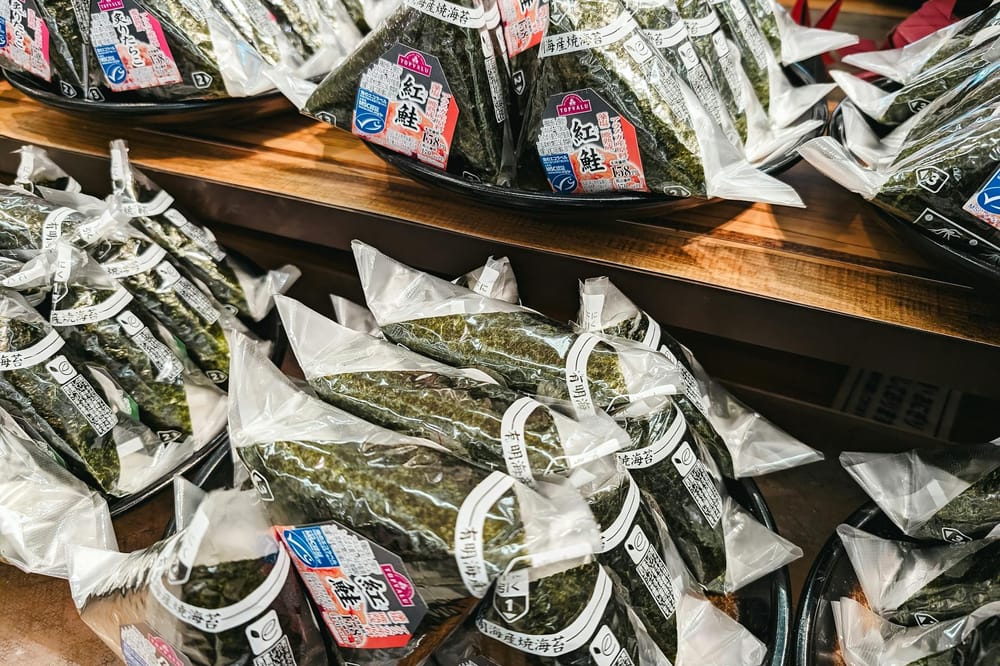
Some are, many are not. Onigiri (rice balls) with seafood fillings such as tuna mayo, salmon, and kombu are often Muslim-friendly, but the rice itself may contain mirin (cooking sake). Many bread products contain margarine with animal-derived shortening. Always check the back of the package — convenience store products follow the same Food Labeling Act rules as supermarket snacks.
How often does Halal Navi update this guide?
Twice a year. We re-open every cited manufacturer page, re-read the current ingredient list, and update the status table. If you spot a packaging change before we do, please send a correction.
Verdict
For Muslim travelers leaving Japan with souvenir snacks in your suitcase, the practical strategy in 2026 is this: read the back of the box, prefer year-round standard flavors over limited editions, and pick from established manufacturers whose ingredient pages are easy to find online. Meiji, Bourbon, Lotte, Koikeya, and Royce' all publish their ingredient lists transparently, which makes ingredient-based assessment realistic.
None of the eight snacks in this guide is halal-certified for the Japanese domestic market, and that fact is unlikely to change quickly. What you are doing is an ingredient-based, manufacturer-disclosed assessment — useful, but not equivalent to a certification stamp. If full certification matters to your household, route through an airport halal corner or a specialty Muslim grocer instead.
The good news is that the same Japanese transparency culture that publishes the world's most detailed allergen disclosures also gives Muslim travelers a fighting chance to make informed choices. With four Japanese words and a careful eye, your souvenir bag becomes a lot more confident.
Sources and references
- Meiji Co., Ltd. — Official product information portal. meiji.co.jp, accessed May 13, 2026.
- Bourbon Corporation — Alfort and cookie brand pages. bourbon.co.jp/brand/alfort/, accessed May 13, 2026.
- Koikeya Inc. — Karamucho product page. koikeya.co.jp/products/karamucho.html, accessed May 13, 2026.
- Lotte Co., Ltd. — Koala's March brand page. lotte.co.jp/products/brand/koala/, accessed May 13, 2026.
- Royce' Confect Co., Ltd. — Official site. royce.com, accessed May 13, 2026.
- NPO Japan Halal Association — Certification database. jhalal.or.jp, accessed May 13, 2026.
- Japan Halal Foundation — Certification information. jhalal.com, accessed May 13, 2026.
- Consumer Affairs Agency of Japan — Food Labeling Act (食品表示法) overview, accessed May 13, 2026.
About this article
Author: Aisha Rahman is a writer on Halal Navi's editorial team. She has been documenting halal and Muslim-friendly food in Japan since 2021 and reads Japanese ingredient labels for a living.
Reviewer: This article was reviewed by Halal Navi's Halal Verification Team, which cross-checks every ingredient claim against the manufacturer's currently published product page before publication. See our editorial standards for the full review process.
Update policy: We re-verify every claim in this article twice yearly. If you find that a manufacturer has changed a recipe or a certification, please contact us and we will update within 7 days.
Disclosure: Halal Navi receives no advertising revenue from any brand mentioned in this article. Product selection reflects independent editorial judgment based on which Japanese souvenir snacks Muslim travelers most commonly ask us about.
Last verified: 2026-05-13